Garmin Forerunner 255 vs Garmin Forerunner 265
The Verdict
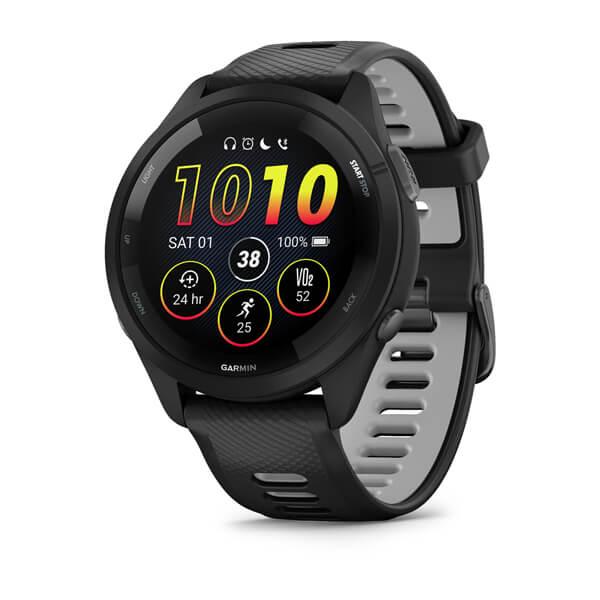
Both Garmin Forerunner models excel at fitness tracking with GPS, heart rate monitoring, and sleep analysis, but they prioritize different strengths. Forerunner 255 features a traditional MIP transflective display delivering exceptional battery endurance: 14 days smartwatch mode and 30 hours GPS runtime, making it ideal for ultramarathoners and extended outdoor activities. Forerunner 265 sacrifices battery longevity (13 days, 20 hours GPS) for a vibrant AMOLED screen with 416x416 resolution versus 260x260, offering superior readability and visual appeal during daily wear. Both weigh under 50g and share identical health sensors, water resistance, and NFC payments. At $349, the 255 represents outstanding value for runners prioritizing battery life and reliability. The 265 justifies its $100 premium primarily through display quality and slightly better processing power. Choose the 255 for marathon training and extended trips; select the 265 if AMOLED visuals matter more than battery longevity.
Who Should Buy
Buy the Garmin Forerunner 255 if…
- →14-day battery life means weekly charging at most
- →Multi-band GPS for exceptional outdoor tracking accuracy
- →Morning Report with daily training readiness and HRV status
Buy the Garmin Forerunner 265 if…
- →Vibrant AMOLED display is a massive upgrade over the 255's MIP screen
- →Training Readiness and Morning Report provide actionable fitness insights
- →Multi-band GPS delivers extremely accurate pace and distance tracking
Category Scores
Pros & Cons
Garmin Forerunner 255
Pros
- 14-day battery life means weekly charging at most
- Multi-band GPS for exceptional outdoor tracking accuracy
- Morning Report with daily training readiness and HRV status
- Race Predictor estimates finish times for 5K to marathon
- Lightweight at 49 g and comfortable for 24/7 wear
Cons
- MIP display lacks the vibrancy of AMOLED competitors
- No touchscreen on base model — button-only navigation
- No ECG or blood pressure monitoring
- Limited smart features compared to Apple Watch or Wear OS
- Third-party app ecosystem is small
Garmin Forerunner 265
Pros
- Vibrant AMOLED display is a massive upgrade over the 255's MIP screen
- Training Readiness and Morning Report provide actionable fitness insights
- Multi-band GPS delivers extremely accurate pace and distance tracking
- 13-day battery with AMOLED is exceptional — best in its class
- Race Widget helps plan pacing strategy for upcoming events
Cons
- No built-in maps — only breadcrumb trail navigation
- No music storage on the base model (265 Music has it)
- No cellular connectivity — phone required for notifications
- Proprietary charging cable is easy to forget when traveling
Full Specifications
| Spec | Garmin Forerunner 255 | Garmin Forerunner 265 |
|---|---|---|
| Software | Garmin proprietary OS | Garmin OS (Connect IQ) |
| Body | ||
| Weight | 49 g | 47 g |
| Case material | Fiber-reinforced polymer | Fiber-reinforced polymer |
| Water resistance | 5ATM | 5ATM |
| Health & Sensors | ||
| ECG | ||
| SpO₂ | ||
| Skin temperature | ||
| Heart rate | ||
| Sleep tracking | ||
| Battery | ||
| Battery life | Up to 14 days (smartwatch), 30 hrs GPS | Up to 13 days (smartwatch), 20 hrs GPS |
| Display | ||
| Size | 46mm | 46mm (1.3 inches) |
| Type | MIP (Memory-in-Pixel) transflective | AMOLED |
| Always-on display | ||
| Resolution | 260 x 260 | 416 x 416 |
| Processor | ||
| Chipset | Garmin custom SoC | Garmin custom processor |
| Connectivity | ||
| GPS | ||
| NFC | ||
| Wi-Fi | ||
| Cellular | ||
| Bluetooth | 5.0 | 5.0 |
Related Comparisons
This comparison is based on verified manufacturer specifications covering display, performance, camera, battery, and build quality. Scores are generated by analyzing specs across weighted categories on a 10-point scale. Learn more about our methodology.
Explore more in smartwatches, see all Garmin products or all Garmin products. View full details for the Garmin Forerunner 255 or the Garmin Forerunner 265.