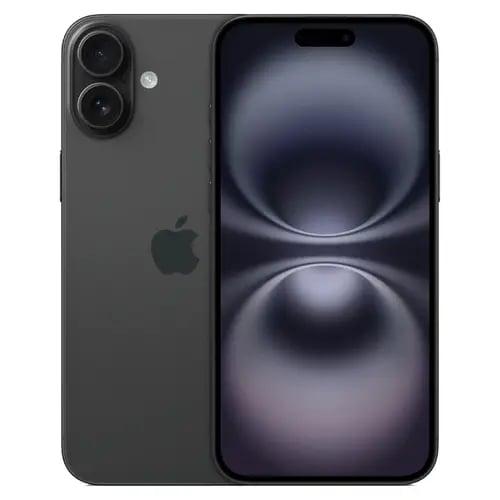
Apple iPhone 16 Plus vs Motorola Moto G Stylus 5G (2024)
The Verdict
Apple's iPhone 16 Plus commands a $500 premium with superior performance from its A18 chip, delivering faster app loading and gaming compared to the Snapdragon 6 Gen 1 in the Moto G Stylus. Display quality favors Apple, featuring 2000 nits brightness and 60Hz refresh against the Moto's 1300 nits with 120Hz, creating trade-offs between clarity and smoothness. Camera performance leans toward iPhone with Dolby Vision 4K recording and larger 48MP main sensor, though Moto's 50MP with OIS and 32MP selfie offer competitive stills. Battery capacity slightly advantages Moto at 5000mAh versus 4674mAh, yet iPhone's optimization typically delivers similar endurance. Moto G Stylus includes the integrated stylus and larger 256GB base storage, adding practical value. For flagship performance, iOS fluidity, and premium build quality, iPhone 16 Plus justifies its price. Budget-conscious buyers prioritizing display smoothness, battery capacity, and stylus functionality should choose Moto G Stylus 5G.
Who Should Buy
Buy the Apple iPhone 16 Plus if…
- →Excellent battery life from large 4674 mAh cell
- →A18 chip supports Apple Intelligence
- →New Camera Control button
Buy the Motorola Moto G Stylus 5G (2024) if…
- →Built-in stylus for note-taking and precise screen interaction
- →Vibrant pOLED 120Hz display with 1300-nit peak brightness
- →IP68 dust and water resistance at the $399 price point
Category Scores
Pros & Cons
Apple iPhone 16 Plus
Pros
- Excellent battery life from large 4674 mAh cell
- A18 chip supports Apple Intelligence
- New Camera Control button
- Bright 2000-nit display
- More affordable than Pro Max
Cons
- Still locked to 60Hz refresh rate
- No telephoto camera
- USB-C limited to USB 2.0 speeds
- No always-on display
Motorola Moto G Stylus 5G (2024)
Pros
- Built-in stylus for note-taking and precise screen interaction
- Vibrant pOLED 120Hz display with 1300-nit peak brightness
- IP68 dust and water resistance at the $399 price point
- Wireless charging support is uncommon in this segment
- Large 5000 mAh battery with respectable 30W fast charging
Cons
- Stylus lacks Bluetooth or air gesture features like S Pen
- No telephoto camera for zoom photography
- Snapdragon 6 Gen 1 is mid-range — not ideal for heavy gaming
- Only one OS update and three years of security patches
- Video recording maxes out at 4K@30fps
Full Specifications
| Spec | Apple iPhone 16 Plus | Motorola Moto G Stylus 5G (2024) |
|---|---|---|
| Software | iOS 18 | Android 14 |
| Body | ||
| Weight | 199 g | 190 g |
| Material | Aluminum frame | Vegan leather back, plastic frame |
| IP rating | IP68 | IP68 |
| Dimensions | 160.9 x 77.8 x 7.8 mm | 162.6 x 75 x 8.3 mm |
| Camera | ||
| Main camera | 48 MP | 50 MP, f/1.8, PDAF, OIS |
| Front camera | 12 MP | 32 MP, f/2.4 |
| Video | 4K@60fps Dolby Vision | 4K@30fps |
| Ultrawide | 12 MP | 13 MP, f/2.2 |
| Memory | ||
| RAM | 8 GB | 8 GB |
| Storage options | 128 GB, 256 GB, 512 GB | 256 GB |
| Battery | ||
| Capacity | 4674 mAh | 5000 mAh |
| Charging | 20W wired | 30W wired (TurboPower) |
| Wireless charging | 25W MagSafe | 15W wireless |
| Display | ||
| Size | 6.7 inches | 6.7 inches |
| Type | Super Retina XDR OLED | pOLED |
| Resolution | 2796 x 1290 | 2400 x 1080 |
| Refresh rate | 60Hz | 120Hz |
| Brightness (nits) | 2000 | 1300 |
| Processor | ||
| CPU | Hexa-core | Octa-core (4x2.2 GHz + 4x1.8 GHz) |
| GPU | Apple GPU (5-core) | Adreno 710 |
| Chipset | Apple A18 | Qualcomm Snapdragon 6 Gen 1 |
| Connectivity | ||
| 5G | ||
| NFC | ||
| USB | USB-C 2.0 | USB-C 2.0 |
| Wi-Fi | Wi-Fi 7 | Wi-Fi 6E |
| Bluetooth | 5.3 | 5.3 |
Related Comparisons
This comparison is based on verified manufacturer specifications covering display, performance, camera, battery, and build quality. Scores are generated by analyzing specs across weighted categories on a 10-point scale. Learn more about our methodology.
Explore more in phones, see all Apple products or all Motorola products. View full details for the Apple iPhone 16 Plus or the Motorola Moto G Stylus 5G (2024).