R95H vs Samsung S95D 65"
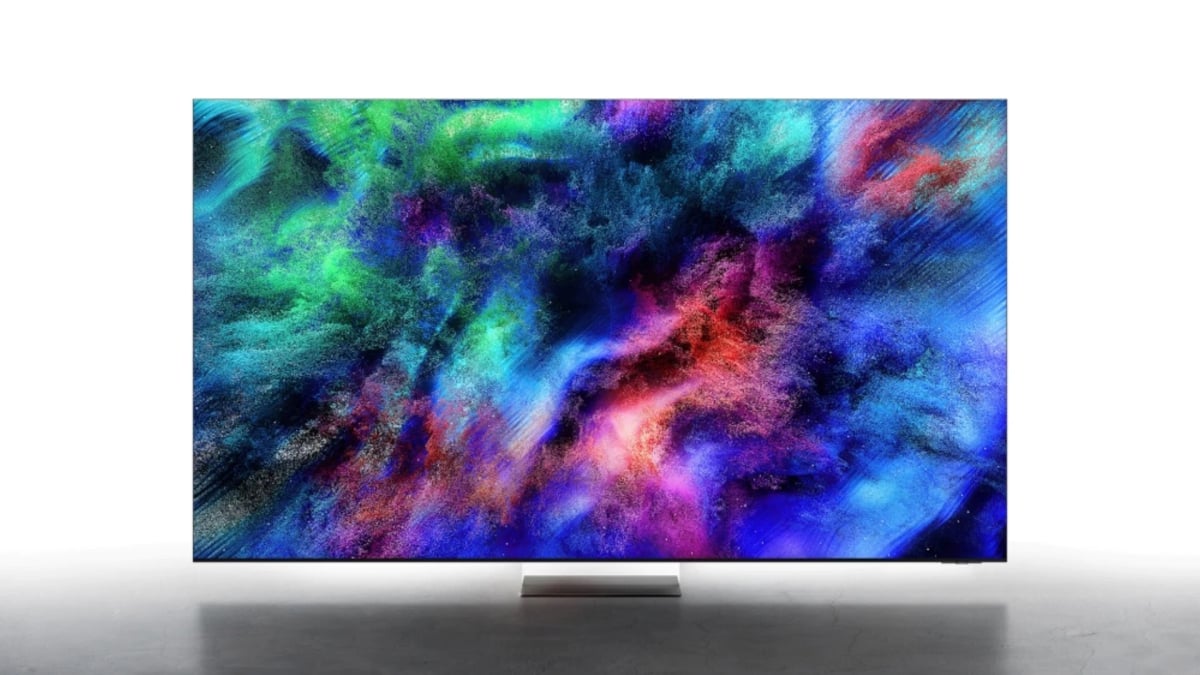

How They Compare
The R95H and Samsung S95D 65" sit in the same category, and on the specifications this page can rank they do not come out level. The spec table below ranks 2 of their differences, and every one of them goes to the R95H — including refresh rate (165Hz vs 120Hz (144Hz VRR via PC)). The R95H is the newer of the two, released in 2026 against 2024. The pros lists below lead with — R95H: Micro RGB LED backlight delivers more precise local dimming and improved color accuracy over standard LED; Samsung S95D 65": Matte anti-glare coating on an OLED panel — best-in-class reflection handling. Use the side-by-side spec table below to compare display, audio, connectivity and smart tv in detail and decide which one fits your priorities.
Who Should Buy
Buy the R95H if…
- →Micro RGB LED backlight delivers more precise local dimming and improved color accuracy over standard LED
- →Four HDMI 2.1 ports support 4K@120Hz gaming on all inputs simultaneously
- →Eclipsa Audio provides next-generation spatial sound alongside Dolby Atmos support
Buy the Samsung S95D 65" if…
- →Matte anti-glare coating on an OLED panel — best-in-class reflection handling
- →QD-OLED achieves some of the highest color volume of any consumer display
- →120Hz panel that reaches 144Hz over PC, with around 9ms of input lag and 0.1ms pixel response, is outstanding for PC and next-gen console gaming
Pros & Cons
R95H
Pros
- Micro RGB LED backlight delivers more precise local dimming and improved color accuracy over standard LED
- Four HDMI 2.1 ports support 4K@120Hz gaming on all inputs simultaneously
- Eclipsa Audio provides next-generation spatial sound alongside Dolby Atmos support
Cons
- Micro RGB LED technology is expected to carry a premium price over conventional LED and QLED models
- Wireless One Connect Ready adds convenience but the full One Connect Box may be sold separately
Samsung S95D 65"
Pros
- Matte anti-glare coating on an OLED panel — best-in-class reflection handling
- QD-OLED achieves some of the highest color volume of any consumer display
- 120Hz panel that reaches 144Hz over PC, with around 9ms of input lag and 0.1ms pixel response, is outstanding for PC and next-gen console gaming
- Thin, elegant design with a nearly bezel-free look
- All four HDMI 2.1 ports support 4K@144Hz for future-proofed connectivity
Cons
- Premium $2,599 price is hard to justify over the LG C4 for most buyers
- Tizen OS shows ads and sponsored content on the home screen
- OLED is prone to permanent burn-in with static content over time
- No Dolby Vision — Samsung still uses only HDR10+ for HDR metadata
Full Specifications
| Spec | R95H | Samsung S95D 65" |
|---|---|---|
| Body | ||
| Weight | 49.38 lb (65-inch) / 66.36 lb (75-inch) / 83.56 lb (85-inch), without stand | 55.1 lbs |
| VESA mount | — | 400 x 300mm |
| Dimensions (w/ stand) | — | 57.0 x 35.9 x 10.9 inches |
| Audio | ||
| Dolby Atmos | ||
| Eclipsa Audio | Not stated | |
| Output (watts) | — | 60 |
| Speakers | — | 4.2.2ch Object Tracking Sound+ |
| Display | ||
| Size | 65, 75, 85 inches | 65" |
| Type | Micro RGB LED | QD-OLED |
| Coating | Matte | — |
| Resolution | 3840 x 2160 (4K UHD) | 3840 x 2160 (4K UHD) |
| Refresh rate | 165Hz | 120Hz (144Hz VRR via PC) |
| HDR | — | Quantum HDR OLED+, HDR10+, HLG |
| Brightness (nits) | — | 2000 |
| Smart TV | ||
| OS | Tizen OS | Tizen OS |
| Voice assistant | — | Bixby, Alexa, Google Assistant |
| Connectivity | ||
| HDMI ports | 4 | 4 |
| Wi-Fi | — | Wi-Fi 6 (802.11ax) |
| Ethernet | Not stated | |
| Bluetooth | — | 5.2 |
| USB ports | — | 2 |
| Gaming | ||
| VRR (Variable Refresh Rate) | Not stated | |
| ALLM | Not stated | |
| Input lag (ms) | — | 9 |
| Processor | ||
| Chipset | — | Neural Quantum Processor 4K |
Want to compare a third product?
Add another product for a 3-way comparison.
Related Comparisons
Explore more in tvs, see all Samsung products or all Samsung products. View full details for the R95H or the Samsung S95D 65".