Samsung Galaxy Note 20 vs Samsung Galaxy Z Fold 4
The Verdict
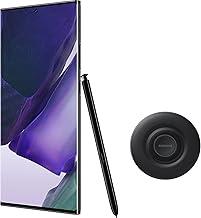
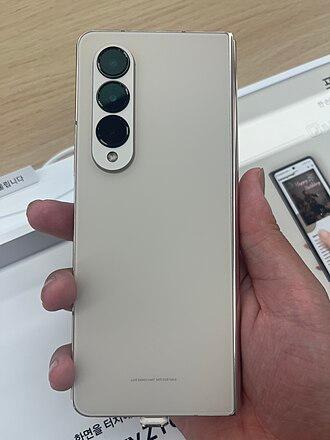
Samsung's Galaxy Note 20 offers a traditional flagship experience with a stylus, excellent 60Hz AMOLED display, and solid camera system anchored by an effective 3x telephoto. Its Snapdragon 865+ processor delivers reliable performance, while the 4300mAh battery handles daily use reasonably well. Galaxy Z Fold 4 represents cutting-edge innovation with dual foldable displays reaching 120Hz, superior Snapdragon 8+ Gen 1 processor, and a more versatile camera setup featuring a 50MP main sensor. The foldable's 7.6-inch inner screen transforms productivity, though its 263g weight and larger footprint demand adjustment. Z Fold 4's premium 12GB RAM, expanded storage to 1TB, and Wi-Fi 6E connectivity justify its $1799 price for early adopters. Note 20 suits users prioritizing stylus functionality and traditional form factor. For sheer capability and future-proof features, Galaxy Z Fold 4 wins decisively.
Who Should Buy
Buy the Samsung Galaxy Note 20 if…
- →S Pen productivity features
- →5G connectivity
- →Samsung DeX support
Buy the Samsung Galaxy Z Fold 4 if…
- →Refined hinge is slimmer and lighter than Fold 3
- →Taskbar for PC-like multitasking
- →Improved cameras over Fold 3
Category Scores
Pros & Cons
Samsung Galaxy Note 20
Pros
- S Pen productivity features
- 5G connectivity
- Samsung DeX support
- Good performance with Snapdragon 865+
- Lighter than Note 20 Ultra
Cons
- Plastic (Glasstic) back at $999
- 60Hz display — no 120Hz
- FHD+ only, no QHD option
- Flat display lacked premium feel of Ultra
- Significant compromises versus Ultra model
Samsung Galaxy Z Fold 4
Pros
- Refined hinge is slimmer and lighter than Fold 3
- Taskbar for PC-like multitasking
- Improved cameras over Fold 3
- IPX8 water resistance
- Flex mode for hands-free use
Cons
- Still very expensive at $1799
- Heavy at 263 g
- Visible crease on inner display
- Under-display camera quality is poor
- Slow 25W charging
Full Specifications
| Spec | Samsung Galaxy Note 20 | Samsung Galaxy Z Fold 4 |
|---|---|---|
| Software | Android 10, One UI 2.5 | Android 12L, One UI 4.1.1 |
| Body | ||
| Weight | 192 g | 263 g |
| Material | Aluminum frame, Gorilla Glass 5 (Glasstic back) | Armor Aluminum frame, Gorilla Glass Victus+ |
| IP rating | IP68 | IPX8 |
| Dimensions | 161.6 x 75.2 x 8.3 mm | 155.1 x 130.1 x 6.3 mm (unfolded) |
| Camera | ||
| Main camera | 12 MP, f/1.8, OIS | 50 MP, f/1.8, OIS |
| Front camera | 10 MP, f/2.2 | 10 MP (cover), 4 MP under-display (inner) |
| Video | 8K@24fps, 4K@60fps | 8K@24fps, 4K@60fps |
| Telephoto | 64 MP, f/2.0, 3x hybrid zoom | 10 MP, f/2.4, 3x optical zoom |
| Ultrawide | 12 MP, f/2.2 | 12 MP, f/2.2 |
| Memory | ||
| RAM | 8 GB | 12 GB |
| Storage options | 128 GB, 256 GB | 256 GB, 512 GB, 1 TB |
| Battery | ||
| Capacity | 4300 mAh | 4400 mAh |
| Charging | 25W wired | 25W wired |
| Wireless charging | 15W wireless | 15W wireless |
| Display | ||
| Size | 6.7 inches | 7.6 inches (inner), 6.2 inches (cover) |
| Type | Super AMOLED Plus | Dynamic AMOLED 2X, foldable |
| Resolution | 2400 x 1080 | 2176 x 1812 (inner), 2316 x 904 (cover) |
| Refresh rate | 60Hz | 120Hz (both) |
| Brightness (nits) | 1000 | 1200 |
| Processor | ||
| CPU | Octa-core (1x3.09 GHz + 3x2.42 GHz + 4x1.8 GHz) | Octa-core (1x3.19 GHz + 3x2.75 GHz + 4x2.0 GHz) |
| GPU | Adreno 650 | Adreno 730 |
| Chipset | Qualcomm Snapdragon 865+ | Qualcomm Snapdragon 8+ Gen 1 |
| Connectivity | ||
| 5G | ||
| NFC | ||
| USB | USB-C 3.2 | USB-C 3.2 |
| Wi-Fi | Wi-Fi 6 | Wi-Fi 6E |
| Bluetooth | 5.0 | 5.2 |
Related Comparisons
This comparison is based on verified manufacturer specifications covering display, performance, camera, battery, and build quality. Scores are generated by analyzing specs across weighted categories on a 10-point scale. Learn more about our methodology.
Explore more in phones, see all Samsung products or all Samsung products. View full details for the Samsung Galaxy Note 20 or the Samsung Galaxy Z Fold 4.