Samsung Galaxy Note 20 Ultra vs Xiaomi 14 Pro
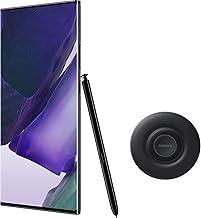

The Verdict
Samsung's Galaxy Note 20 Ultra brought flagship features to 2020, but Xiaomi's 14 Pro represents a significant generational leap. The display advantage goes to Xiaomi with 3200 x 1440 resolution, 120Hz refresh, and exceptional 3000 nits peak brightness compared to Note 20 Ultra's 1500 nits. Performance favors Xiaomi decisively: Snapdragon 8 Gen 3 crushes the dated 865+ by roughly 40-50% in multi-threaded workloads, while the Adreno 750 GPU outperforms the 650 substantially. Camera systems diverge in philosophy. Samsung's 108MP main with laser autofocus and 5x periscope zoom offered compelling range, but Xiaomi's triple 50MP setup with variable aperture (f/1.42-f/4.0), larger 1/1.31" sensor, and superior computational photography produces genuinely better real-world images across lighting conditions. Battery capacity favors Xiaomi at 4880mAh versus 4500mAh, but charging tells the real story: 120W wired and 50W wireless absolutely demolish Samsung's 25W and 15W offerings. Storage flexibility goes to Xiaomi with 1TB option. Connectivity favors Xiaomi with WiFi 7 and Bluetooth 5.4. The Galaxy Note 20 Ultra costs $200 more despite being three years older technologically. Xiaomi 14 Pro wins comprehensively across modern metrics.
Who Should Buy
Buy the Samsung Galaxy Note 20 Ultra if…
- →S Pen with ultra-low 9ms latency
- →120Hz adaptive QHD+ display
- →108 MP camera with 50x Space Zoom
Buy the Xiaomi 14 Pro if…
- →Bright 3000-nit LTPO AMOLED display
- →Variable-aperture main camera with Leica tuning
- →Insanely fast 120W wired charging
Category Scores
Pros & Cons
Samsung Galaxy Note 20 Ultra
Pros
- S Pen with ultra-low 9ms latency
- 120Hz adaptive QHD+ display
- 108 MP camera with 50x Space Zoom
- 5x optical periscope telephoto
- Samsung DeX for desktop-like experience
Cons
- Slow 25W charging for a $1299 device
- No charger in the box in some regions
- Large and heavy
- S Pen silo location changed
- microSD slot removed
Xiaomi 14 Pro
Pros
- Bright 3000-nit LTPO AMOLED display
- Variable-aperture main camera with Leica tuning
- Insanely fast 120W wired charging
- Top-tier Snapdragon 8 Gen 3 chipset
Cons
- Not officially sold in the US
- HyperOS bloatware in some markets
- Heavy and slippery glass back
- Telephoto limited to 3.2x reach
Full Specifications
| Spec | Samsung Galaxy Note 20 Ultra | Xiaomi 14 Pro |
|---|---|---|
| Software | Android 10, One UI 2.5 | Android 14, HyperOS |
| Body | ||
| Weight | 208 g | 223 g |
| Material | Stainless steel frame, Gorilla Glass Victus | Aluminum frame, glass back |
| IP rating | IP68 | IP68 |
| Dimensions | 164.8 x 77.2 x 8.1 mm | 161.4 x 75.3 x 8.5 mm |
| Camera | ||
| Main camera | 108 MP, f/1.8, OIS, laser AF | 50 MP variable f/1.42-f/4.0, 1/1.31" Light Hunter 900 |
| Front camera | 10 MP, f/2.2 | 32 MP, f/2.0 |
| Video | 8K@24fps, 4K@60fps | 8K@24fps, 4K@60fps |
| Periscope | 12 MP, f/3.0, 5x optical zoom | — |
| Ultrawide | 12 MP, f/2.2 | 50 MP, f/2.2, 14mm |
| Telephoto | — | 50 MP 3.2x f/2.0 |
| Memory | ||
| RAM | 12 GB | 12 GB / 16 GB |
| Storage options | 128 GB, 512 GB | 256 GB, 512 GB, 1 TB |
| Battery | ||
| Capacity | 4500 mAh | 4880 mAh |
| Charging | 25W wired | 120W wired |
| Wireless charging | 15W wireless | 50W wireless |
| Display | ||
| Size | 6.9 inches | 6.73 inches |
| Type | Dynamic AMOLED 2X | LTPO AMOLED |
| Resolution | 3088 x 1440 | 3200 x 1440 |
| Refresh rate | 120Hz | 120Hz |
| Brightness (nits) | 1500 | 3000 |
| Processor | ||
| CPU | Octa-core (1x3.09 GHz + 3x2.42 GHz + 4x1.8 GHz) | Octa-core (1x3.3 GHz Cortex-X4 + 5x3.2 GHz A720 + 2x2.3 GHz A520) |
| GPU | Adreno 650 | Adreno 750 |
| Chipset | Qualcomm Snapdragon 865+ | Qualcomm Snapdragon 8 Gen 3 |
| Connectivity | ||
| 5G | ||
| NFC | ||
| USB | USB-C 3.2 | USB-C 3.2 |
| Wi-Fi | Wi-Fi 6 | Wi-Fi 7 |
| Bluetooth | 5.0 | 5.4 |
Want to compare a third product?
Add another product for a 3-way comparison.
Related Comparisons
This comparison is based on verified manufacturer specifications covering display, performance, camera, battery, and build quality. Scores are generated by analyzing specs across weighted categories on a 10-point scale. Learn more about our methodology.
Explore more in phones, see all Samsung products or all Xiaomi products. View full details for the Samsung Galaxy Note 20 Ultra or the Xiaomi 14 Pro.