Nintendo Switch OLED vs Valve Steam Deck OLED

The Verdict
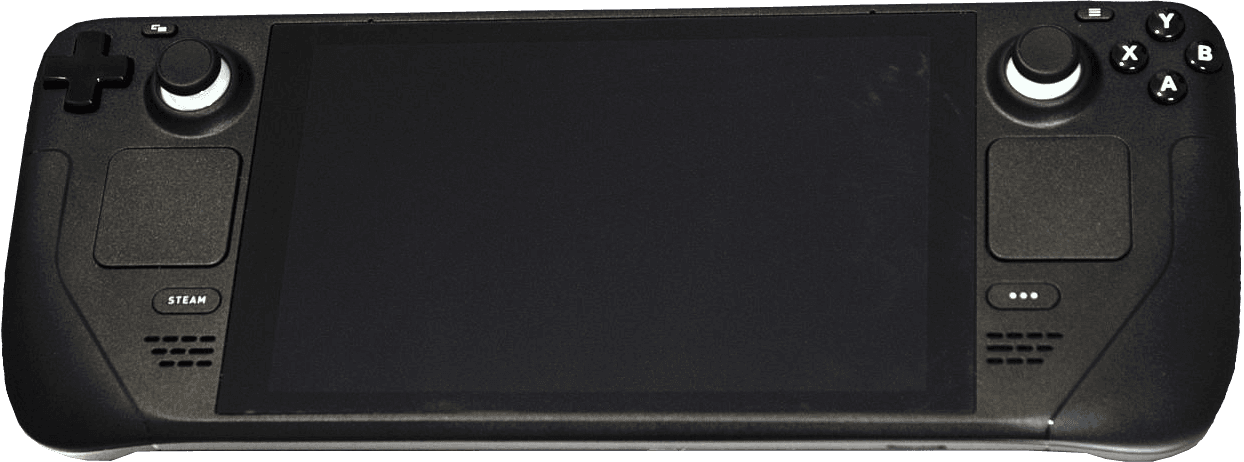
Nintendo Switch OLED and Valve Steam Deck OLED serve fundamentally different gaming audiences despite both featuring 7-inch OLED screens. Switch OLED delivers Nintendo's polished ecosystem with 4,310mAh battery lasting 4.5-9 hours depending on usage, 64GB storage (microSD expandable), and lightweight 420g design ideal for portability. Its Tegra X1+ processor handles Nintendo's exclusive library smoothly but struggles with modern AAA titles. Steam Deck OLED dramatically outpowers it with AMD Zen 2 processing, 16GB LPDDR5 RAM, up to 1TB storage, and substantially superior display brightness at 1,000 nits versus Switch's 350 nits. The 7.4-inch screen runs at 90Hz compared to Switch's 60Hz, creating noticeably smoother gameplay. Steam Deck weighs 640g and measures thicker at 49mm, sacrificing portability for raw capability. Battery life ranges 3-12 hours on Steam Deck, broader but less consistent than Switch. At $349 versus $549, Switch offers better value for Nintendo-exclusive content and casual gaming, while Steam Deck justifies its premium for PC gaming portability, emulation prowess, and significantly stronger technical specifications. Choose Switch for Nintendo franchises and travel convenience; pick Steam Deck if you want genuine 1080p gaming performance in a handheld form factor.
Who Should Buy
Buy the Nintendo Switch OLED if…
- →Vibrant 7-inch OLED display with deeper blacks than LCD Switch
- →Massive Nintendo-exclusive game library including Zelda and Mario
- →Detachable Joy-Cons enable local multiplayer on one device
Buy the Valve Steam Deck OLED if…
- →Gorgeous HDR OLED display with 1000-nit peak brightness and true blacks
- →90Hz refresh rate is noticeably smoother than the original LCD model
- →Access to entire Steam library with Proton compatibility layer
Category Scores
Pros & Cons
Nintendo Switch OLED
Pros
- Vibrant 7-inch OLED display with deeper blacks than LCD Switch
- Massive Nintendo-exclusive game library including Zelda and Mario
- Detachable Joy-Cons enable local multiplayer on one device
- Wide adjustable kickstand for stable tabletop play
- Lightweight at 420 g for portable gaming
Cons
- 720p resolution is low — noticeably soft on the 7-inch screen
- Tegra X1+ is aging — many third-party ports run poorly
- Only 64 GB internal storage — microSD required for larger libraries
- 60Hz cap and no VRR support
- Joy-Con drift remains an ongoing reliability concern
Valve Steam Deck OLED
Pros
- Gorgeous HDR OLED display with 1000-nit peak brightness and true blacks
- 90Hz refresh rate is noticeably smoother than the original LCD model
- Access to entire Steam library with Proton compatibility layer
- 50 Wh battery provides 30-50% more playtime than LCD model
- Wi-Fi 6E and Bluetooth 5.3 are significant connectivity upgrades
Cons
- 1280 x 800 resolution limits sharpness on the 7.4-inch display
- 640 g is heavy for extended handheld gaming sessions
- Zen 2 CPU is aging and struggles with the latest AAA titles at high settings
- Battery life as low as 3 hours in demanding games
- No built-in kickstand for tabletop or docked play
Full Specifications
| Spec | Nintendo Switch OLED | Valve Steam Deck OLED |
|---|---|---|
| Software | Nintendo proprietary OS | SteamOS 3.0 (Arch-based Linux) |
| Body | ||
| Weight | 420 g (with Joy-Cons) | 640 g |
| Material | Plastic chassis with adjustable wide kickstand | Plastic chassis with aluminum brackets |
| Dimensions | 242 x 102 x 13.9 mm | 298 x 117 x 49 mm |
| Ports | ||
| USB-C ports | 1 | 1 |
| Microsd | ||
| Headphone Jack | ||
| Memory | ||
| Storage options | 64 GB internal (microSD expandable) | 512 GB NVMe SSD, 1 TB NVMe SSD |
| Battery | ||
| Battery life | 4.5-9 hours (game dependent) | 3-12 hours (game dependent) |
| Capacity | 4310 mAh | 50 Wh |
| Display | ||
| Size | 7 inches | 7.4 inches |
| Type | OLED | HDR OLED |
| Resolution | 1280 x 720 | 1280 x 800 |
| Refresh rate | 60Hz | 90Hz |
| Brightness (nits) | 350 | 1000 |
| Processor | ||
| RAM | 4 GB LPDDR4 | 16 GB LPDDR5 (6400 MT/s) |
| Cores | 4+4 CPU cores, 256 CUDA core GPU | 4-core CPU, 8-core RDNA 2 GPU |
| Chipset | NVIDIA Custom Tegra X1+ (ARM Cortex-A57 quad-core + 4x A53) | AMD custom APU (Zen 2, 4-core / 8-thread, 2.4-3.5 GHz) |
| Connectivity | ||
| Wi-Fi | Wi-Fi 5 | Wi-Fi 6E |
| Bluetooth | 4.1 | 5.3 |
Want to compare a third product?
Add another product for a 3-way comparison.
Related Comparisons
This comparison is based on verified manufacturer specifications covering display, performance, camera, battery, and build quality. Scores are generated by analyzing specs across weighted categories on a 10-point scale. Learn more about our methodology.
Explore more in laptops, see all Nintendo products or all Valve products. View full details for the Nintendo Switch OLED or the Valve Steam Deck OLED.