Nintendo Switch OLED vs Razer Blade Stealth 13

The Verdict
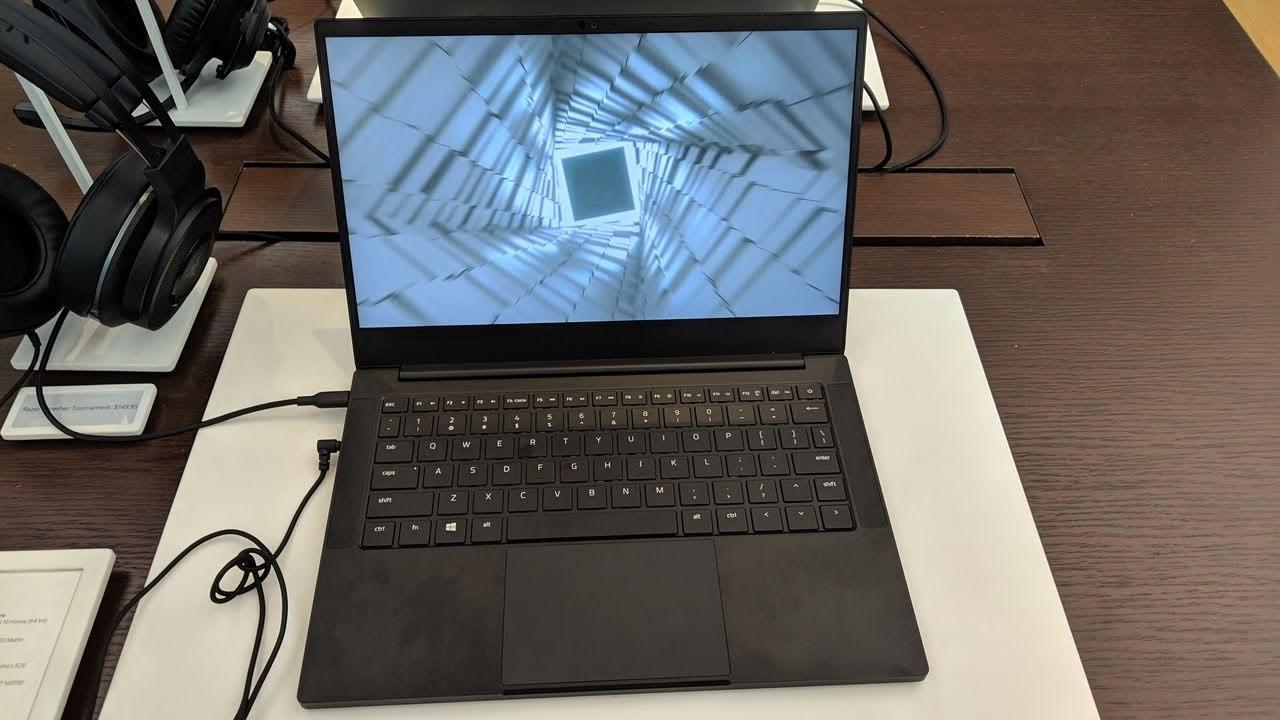
Comparing these devices requires acknowledging they serve fundamentally different purposes. The Nintendo Switch OLED is a hybrid gaming console with a 7-inch 1280x720 OLED display, 4GB RAM, and custom NVIDIA Tegra X1+ processor, priced at $349. Battery life ranges from 4.5 to 9 hours depending on game demands, and it excels at portable gaming with access to Nintendo's exclusive titles. The Razer Blade Stealth 13, conversely, is a premium ultrabook with a 13.3-inch 1920x1200 IPS display, 16GB LPDDR5 RAM, Intel Core i7-1260P processor, and 512GB SSD at $1799. It delivers genuine laptop functionality for productivity, content creation, and demanding applications, with up to 7 hours of battery life. The Switch OLED offers superior OLED color accuracy and contrast but lower resolution. The Razer provides significantly more processing power, storage, RAM, and display sharpness. Value-wise, the Switch OLED delivers exceptional gaming entertainment within its ecosystem for the price, while the Razer Stealth 13 justifies its premium cost through professional-grade performance and Windows 11 versatility. These aren't competitors, they're tools for different needs. Choose the Switch for portable gaming; choose the Razer for portable computing.
Who Should Buy
Buy the Nintendo Switch OLED if…
- →Vibrant 7-inch OLED display with deeper blacks than LCD Switch
- →Massive Nintendo-exclusive game library including Zelda and Mario
- →Detachable Joy-Cons enable local multiplayer on one device
Buy the Razer Blade Stealth 13 if…
- →Premium CNC aluminum unibody build in an ultrabook form factor
- →Compact 13.3-inch design fits in any bag
- →Per-key RGB Chroma keyboard — rare in ultrabooks
Category Scores
Pros & Cons
Nintendo Switch OLED
Pros
- Vibrant 7-inch OLED display with deeper blacks than LCD Switch
- Massive Nintendo-exclusive game library including Zelda and Mario
- Detachable Joy-Cons enable local multiplayer on one device
- Wide adjustable kickstand for stable tabletop play
- Lightweight at 420 g for portable gaming
Cons
- 720p resolution is low — noticeably soft on the 7-inch screen
- Tegra X1+ is aging — many third-party ports run poorly
- Only 64 GB internal storage — microSD required for larger libraries
- 60Hz cap and no VRR support
- Joy-Con drift remains an ongoing reliability concern
Razer Blade Stealth 13
Pros
- Premium CNC aluminum unibody build in an ultrabook form factor
- Compact 13.3-inch design fits in any bag
- Per-key RGB Chroma keyboard — rare in ultrabooks
- Dual Thunderbolt 4 ports for external GPU docks
- Sleek stealth-black aesthetic works in professional settings
Cons
- $1,799 is overpriced for integrated-graphics-only performance
- No discrete GPU — cannot game without an eGPU
- 53.1 Wh battery provides only 5-6 hours in practice
- Fan noise is noticeable even under light workloads
- Razer quality control concerns persist
Full Specifications
| Spec | Nintendo Switch OLED | Razer Blade Stealth 13 |
|---|---|---|
| Software | Nintendo proprietary OS | Windows 11 Home |
| Body | ||
| Weight | 420 g (with Joy-Cons) | 3.09 lbs (1.4 kg) |
| Material | Plastic chassis with adjustable wide kickstand | CNC aluminum unibody |
| Dimensions | 242 x 102 x 13.9 mm | 11.99 x 8.27 x 0.6 inches |
| Ports | ||
| USB-C ports | 1 | 2 |
| Microsd | — | |
| Headphone Jack | — | |
| HDMI | — | |
| USB-A ports | — | 1 |
| SD card | — | |
| Thunderbolt ports | — | 2 |
| Memory | ||
| Storage options | 64 GB internal (microSD expandable) | — |
| Battery | ||
| Battery life | 4.5-9 hours (game dependent) | Up to 7 hours |
| Capacity | 4310 mAh | 53.1 Wh |
| Display | ||
| Size | 7 inches | 13.3 inches |
| Type | OLED | IPS |
| Resolution | 1280 x 720 | 1920 x 1200 |
| Refresh rate | 60Hz | 60Hz |
| Brightness (nits) | 350 | 400 |
| Processor | ||
| RAM | 4 GB LPDDR4 | 16 GB LPDDR5 |
| Cores | 4+4 CPU cores, 256 CUDA core GPU | 12 cores (4P + 8E) |
| Chipset | NVIDIA Custom Tegra X1+ (ARM Cortex-A57 quad-core + 4x A53) | Intel Core i7-1260P (12th Gen) |
| Connectivity | ||
| Wi-Fi | Wi-Fi 5 | — |
| Bluetooth | 4.1 | — |
| Storage | ||
| SSD | — | 512 GB PCIe Gen 4 NVMe |
| Expandable storage | — | |
| Keyboard | ||
| Backlit | — | |
Want to compare a third product?
Add another product for a 3-way comparison.
Related Comparisons
- Razer Blade Stealth 13 vs Samsung Galaxy Book5 Pro
- Razer Blade Stealth 13 vs Samsung Galaxy Book4 Ultra
- Razer Blade Stealth 13 vs Samsung Galaxy Book4 Pro 360
- Razer Blade Stealth 13 vs Samsung Galaxy Book4 Pro
- Razer Blade Stealth 13 vs Samsung Galaxy Book4 360
- Razer Blade Stealth 13 vs Samsung Galaxy Book3 Ultra
This comparison is based on verified manufacturer specifications covering display, performance, camera, battery, and build quality. Scores are generated by analyzing specs across weighted categories on a 10-point scale. Learn more about our methodology.
Explore more in laptops, see all Nintendo products or all Razer products. View full details for the Nintendo Switch OLED or the Razer Blade Stealth 13.