Nintendo Switch OLED vs Razer Blade 16 (2024)

The Verdict
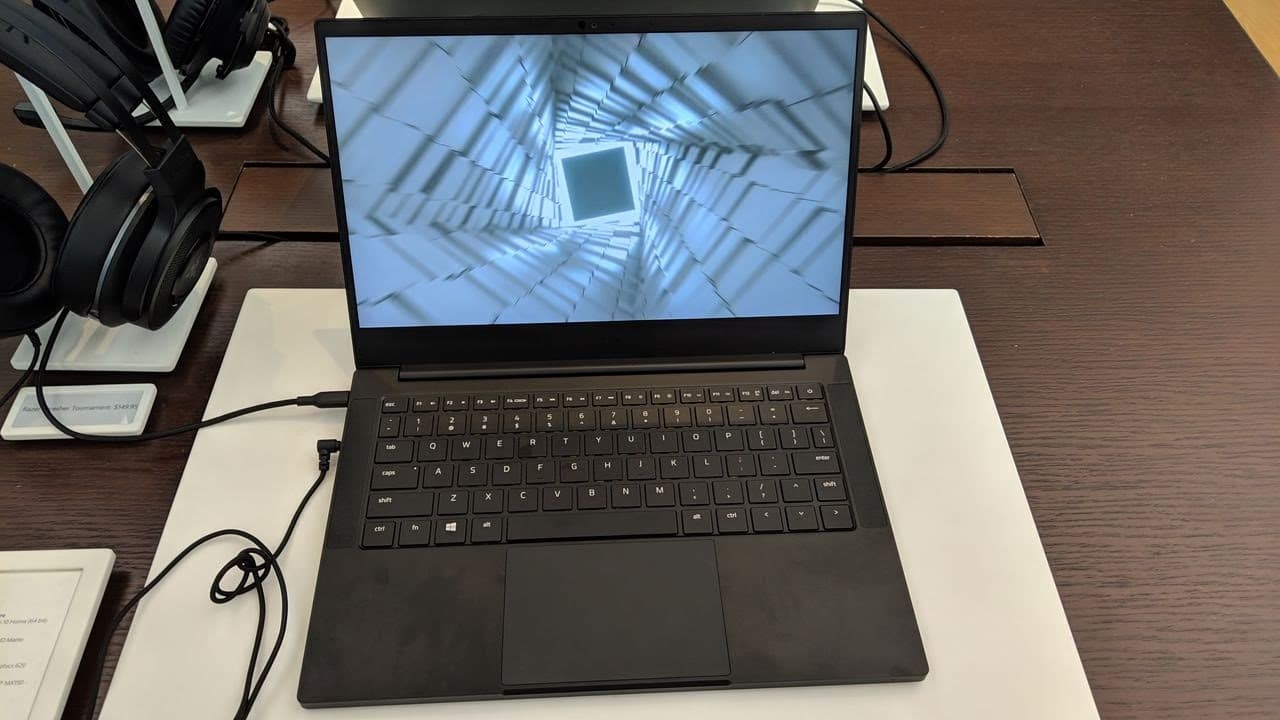
These devices serve completely different purposes despite both fitting the 'laptop' category. Nintendo Switch OLED is a handheld gaming console at $349, while Razer Blade 16 is a professional-grade gaming and productivity laptop at $2999.99, making direct comparison challenging. Display quality slightly favors Razer with its 16-inch OLED panel (2560 x 1600, 240Hz refresh rate) versus Switch's compact 7-inch OLED (1280 x 720, 60Hz). Performance shows a massive gap: Razer's Intel Core i9-14900HX with 32GB DDR5 RAM and 1TB SSD vastly outpaces Switch's ARM-based Tegra X1+ with 4GB RAM and 64GB storage. Battery life tells an interesting story, with Switch lasting 4.5-9 hours depending on games while Razer manages around 6 hours under heavy workloads. Portability decisively favors Switch at 420g versus Razer's 2.45kg. Price justifies the performance divide: Razer handles 4K video editing and AAA gaming at high settings, while Switch excels at local multiplayer and Nintendo titles. Choose Switch if you want portable, affordable gaming with a strong first-party library. Select Razer if you need a powerhouse for professional work and demanding games.
Who Should Buy
Buy the Nintendo Switch OLED if…
- →Vibrant 7-inch OLED display with deeper blacks than LCD Switch
- →Massive Nintendo-exclusive game library including Zelda and Mario
- →Detachable Joy-Cons enable local multiplayer on one device
Buy the Razer Blade 16 (2024) if…
- →Top-tier RTX 40-series GPU options up to RTX 4090
- →Gorgeous QHD+ 240Hz OLED display
- →Premium CNC aluminum chassis with slim profile
Category Scores
Pros & Cons
Nintendo Switch OLED
Pros
- Vibrant 7-inch OLED display with deeper blacks than LCD Switch
- Massive Nintendo-exclusive game library including Zelda and Mario
- Detachable Joy-Cons enable local multiplayer on one device
- Wide adjustable kickstand for stable tabletop play
- Lightweight at 420 g for portable gaming
Cons
- 720p resolution is low — noticeably soft on the 7-inch screen
- Tegra X1+ is aging — many third-party ports run poorly
- Only 64 GB internal storage — microSD required for larger libraries
- 60Hz cap and no VRR support
- Joy-Con drift remains an ongoing reliability concern
Razer Blade 16 (2024)
Pros
- Top-tier RTX 40-series GPU options up to RTX 4090
- Gorgeous QHD+ 240Hz OLED display
- Premium CNC aluminum chassis with slim profile
- Comprehensive port selection including SD card and HDMI 2.1
Cons
- Very expensive even at base configuration
- Battery life is short under any real workload
- Runs hot and loud during gaming sessions
- Heavy for a 16-inch laptop intended to be portable
Full Specifications
| Spec | Nintendo Switch OLED | Razer Blade 16 (2024) |
|---|---|---|
| Software | Nintendo proprietary OS | Windows 11 Home |
| Body | ||
| Weight | 420 g (with Joy-Cons) | 2.45 kg |
| Material | Plastic chassis with adjustable wide kickstand | CNC aluminum unibody |
| Dimensions | 242 x 102 x 13.9 mm | 355 x 235 x 21.99 mm |
| Ports | ||
| USB-C ports | 1 | 2 |
| Microsd | — | |
| Headphone Jack | — | |
| HDMI | — | 1 |
| USB-A ports | — | 3 |
| SD card | — | |
| Thunderbolt ports | — | 2 |
| Memory | ||
| Storage options | 64 GB internal (microSD expandable) | — |
| Battery | ||
| Battery life | 4.5-9 hours (game dependent) | Up to 6 hours |
| Capacity | 4310 mAh | 95.2 Wh |
| Display | ||
| Size | 7 inches | 16 inches |
| Type | OLED | OLED |
| Resolution | 1280 x 720 | 2560 x 1600 |
| Refresh rate | 60Hz | 240Hz |
| Brightness (nits) | 350 | 400 |
| Processor | ||
| RAM | 4 GB LPDDR4 | 32 GB DDR5 |
| Cores | 4+4 CPU cores, 256 CUDA core GPU | 24 cores |
| Chipset | NVIDIA Custom Tegra X1+ (ARM Cortex-A57 quad-core + 4x A53) | Intel Core i9-14900HX |
| Connectivity | ||
| Wi-Fi | Wi-Fi 5 | — |
| Bluetooth | 4.1 | — |
| Storage | ||
| SSD | — | 1 TB |
| Expandable storage | — | |
| Keyboard | ||
| Backlit | — | |
Want to compare a third product?
Add another product for a 3-way comparison.
Related Comparisons
This comparison is based on verified manufacturer specifications covering display, performance, camera, battery, and build quality. Scores are generated by analyzing specs across weighted categories on a 10-point scale. Learn more about our methodology.
Explore more in laptops, see all Nintendo products or all Razer products. View full details for the Nintendo Switch OLED or the Razer Blade 16 (2024).