Microsoft Surface Go 4 vs Valve Steam Deck OLED
The Verdict
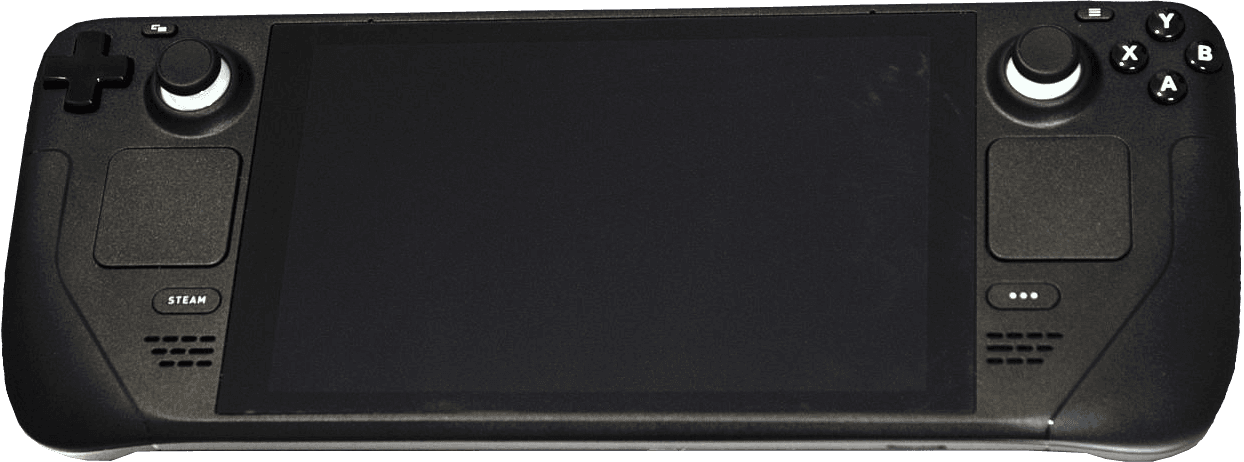
Microsoft Surface Go 4 targets productivity users seeking a lightweight Windows tablet-laptop hybrid, while Valve Steam Deck OLED is purpose-built for gaming enthusiasts. Surface Go 4 offers a larger 10.5-inch display with better brightness (400 nits) and runs full Windows 11 Pro, making it versatile for work and casual use. Steam Deck OLED counters with a superior OLED display (1000 nits peak), faster 90Hz refresh rate, more RAM (16GB vs 8GB), and stronger gaming performance via its AMD Zen 2 APU. Battery life varies dramatically by use case: Surface Go 4 provides 12.5 hours for office work, while Steam Deck ranges 3-12 hours depending on game intensity. Storage comparison favors Steam Deck with 512GB baseline options versus Surface Go 4's fixed 128GB. Surface Go 4's Windows compatibility and business-grade design suit professionals, whereas Steam Deck OLED's specialized hardware and game library make it unbeatable for portable gaming. Choose Surface Go 4 for work flexibility; choose Steam Deck OLED if gaming is your priority.
Who Should Buy
Buy the Microsoft Surface Go 4 if…
- →Ultra-portable at 1.22 lbs — lightest Windows tablet/laptop
- →Windows 11 Pro included — enterprise-ready out of the box
- →Surface Pen and Type Cover support for versatile use
Buy the Valve Steam Deck OLED if…
- →Gorgeous HDR OLED display with 1000-nit peak brightness and true blacks
- →90Hz refresh rate is noticeably smoother than the original LCD model
- →Access to entire Steam library with Proton compatibility layer
Category Scores
Pros & Cons
Microsoft Surface Go 4
Pros
- Ultra-portable at 1.22 lbs — lightest Windows tablet/laptop
- Windows 11 Pro included — enterprise-ready out of the box
- Surface Pen and Type Cover support for versatile use
- PixelSense touchscreen with excellent touch and pen accuracy
- microSD slot for expandable storage
Cons
- Intel N200 is slow for anything beyond basic web browsing
- 128 GB storage fills up quickly with Windows updates
- Type Cover keyboard sold separately at $99-$129
- Only one USB-C port — no USB-A, no HDMI
Valve Steam Deck OLED
Pros
- Gorgeous HDR OLED display with 1000-nit peak brightness and true blacks
- 90Hz refresh rate is noticeably smoother than the original LCD model
- Access to entire Steam library with Proton compatibility layer
- 50 Wh battery provides 30-50% more playtime than LCD model
- Wi-Fi 6E and Bluetooth 5.3 are significant connectivity upgrades
Cons
- 1280 x 800 resolution limits sharpness on the 7.4-inch display
- 640 g is heavy for extended handheld gaming sessions
- Zen 2 CPU is aging and struggles with the latest AAA titles at high settings
- Battery life as low as 3 hours in demanding games
- No built-in kickstand for tabletop or docked play
Full Specifications
| Spec | Microsoft Surface Go 4 | Valve Steam Deck OLED |
|---|---|---|
| Software | Windows 11 Pro | SteamOS 3.0 (Arch-based Linux) |
| Body | ||
| Weight | 1.22 lbs (0.55 kg) | 640 g |
| Material | Magnesium alloy | Plastic chassis with aluminum brackets |
| Dimensions | 9.65 x 6.9 x 0.33 inches | 298 x 117 x 49 mm |
| Ports | ||
| USB-C ports | 1 | 1 |
| SD card | — | |
| Microsd | — | |
| Headphone Jack | — | |
| Battery | ||
| Battery life | Up to 12.5 hours | 3-12 hours (game dependent) |
| Capacity | 28 Wh | 50 Wh |
| Display | ||
| Size | 10.5 inches | 7.4 inches |
| Type | PixelSense IPS touchscreen | HDR OLED |
| Resolution | 1920 x 1280 | 1280 x 800 |
| Refresh rate | 60Hz | 90Hz |
| Brightness (nits) | 400 | 1000 |
| Storage | ||
| SSD | 128 GB UFS | — |
| Expandable storage | — | |
| Keyboard | ||
| Backlit | — | |
| Processor | ||
| RAM | 8 GB LPDDR5 | 16 GB LPDDR5 (6400 MT/s) |
| Cores | 4 cores | 4-core CPU, 8-core RDNA 2 GPU |
| Chipset | Intel N200 | AMD custom APU (Zen 2, 4-core / 8-thread, 2.4-3.5 GHz) |
| Memory | ||
| Storage options | — | 512 GB NVMe SSD, 1 TB NVMe SSD |
| Connectivity | ||
| Wi-Fi | — | Wi-Fi 6E |
| Bluetooth | — | 5.3 |
Related Comparisons
This comparison is based on verified manufacturer specifications covering display, performance, camera, battery, and build quality. Scores are generated by analyzing specs across weighted categories on a 10-point scale. Learn more about our methodology.
Explore more in laptops, see all Microsoft products or all Valve products. View full details for the Microsoft Surface Go 4 or the Valve Steam Deck OLED.