T-Deck Max vs OnePlus Ace 7 Pro
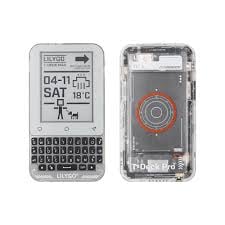

How They Compare
The T-Deck Max and OnePlus Ace 7 Pro sit in the same category and end up appealing to slightly different buyers. The T-Deck Max is the cheaper of the two at $110 versus $716, a difference of about $606. The spec table below ranks 2 of their differences, and they do not all point the same way — the T-Deck Max wins 1 of them and the OnePlus Ace 7 Pro 1. The pros lists below lead with — T-Deck Max: LoRa connectivity enables off-grid, license-free long-range messaging with no monthly fees; OnePlus Ace 7 Pro: 200MP main camera delivers exceptional detail capture for a mid-to-flagship tier device. Use the side-by-side spec table below to compare display, camera, processor and battery in detail and decide which one fits your priorities.
Who Should Buy
Buy the T-Deck Max if…
- →LoRa connectivity enables off-grid, license-free long-range messaging with no monthly fees
- →Physical QWERTY keyboard makes text input practical for a device this size
- →Low entry price of $110 for a GPS, LoRa, and optional 4G LTE capable handheld
Buy the OnePlus Ace 7 Pro if…
- →200MP main camera delivers exceptional detail capture for a mid-to-flagship tier device
- →50MP periscope telephoto with 3.5x optical zoom enables versatile long-range shooting
- →Snapdragon 8 Elite Gen 5 chipset positions this among the most powerful Android phones of 2026
Pros & Cons
T-Deck Max
Pros
- LoRa connectivity enables off-grid, license-free long-range messaging with no monthly fees
- Physical QWERTY keyboard makes text input practical for a device this size
- Low entry price of $110 for a GPS, LoRa, and optional 4G LTE capable handheld
Cons
- 320 x 240 e-ink display is very low resolution by any modern smartphone standard
- ESP32-S3 processor and custom firmware mean no app ecosystem and significant DIY setup required
OnePlus Ace 7 Pro
Pros
- 200MP main camera delivers exceptional detail capture for a mid-to-flagship tier device
- 50MP periscope telephoto with 3.5x optical zoom enables versatile long-range shooting
- Snapdragon 8 Elite Gen 5 chipset positions this among the most powerful Android phones of 2026
Cons
- Pricing is unconfirmed, making value assessment difficult at launch
- Full spec sheet including display size, battery capacity, and RAM options has not been officially published
Full Specifications
| Spec | T-Deck Max | OnePlus Ace 7 Pro |
|---|---|---|
| Software | Custom firmware; Arduino and PlatformIO compatible; no Android | Android |
| Body | ||
| Overview | Compact handheld with physical QWERTY keyboard, microphone, speaker, microSD slot | — |
| Form factor | — | Ultrasonic in-display fingerprint scanner |
| Camera | ||
| Overview | None | — |
| Main camera | — | 200MP |
| Front camera | — | 32MP |
| Telephoto | — | 50MP periscope, 3.5x optical zoom |
| Memory | ||
| Overview | MicroSD card slot for storage expansion; onboard flash varies by firmware build | — |
| Expandable storage | microSD | No |
| Battery | ||
| Overview | Not officially specified; estimated small LiPo cell given device size | — |
| Charging | — | 100W wired |
| Display | ||
| Overview | 3.1-inch e-ink panel, 320 x 240 pixels | — |
| Size | 3.1-inch | — |
| Resolution | 320 x 240 | — |
| Type | — | AMOLED |
| Refresh rate | — | 120Hz |
| Processor | ||
| Overview | ESP32-S3 dual-core Xtensa LX7, up to 240MHz | — |
| CPU | dual-core | — |
| Chipset | ESP32-S3 | Snapdragon 8 Elite Gen 5 |
| Connectivity | ||
| Overview | LoRa (long-range radio), GPS/GNSS, optional 4G LTE module, Wi-Fi (ESP32-S3 built-in), Bluetooth 5.0 | — |
| 5G | Yes | |
| Bluetooth | 5.0 | — |
| NFC | Not stated | |
Want to compare a third product?
Add another product for a 3-way comparison.
Related Comparisons
Explore more in phones, see all Lilygo products or all OnePlus products. View full details for the T-Deck Max or the OnePlus Ace 7 Pro.