Lenovo Tab P11 (2nd Gen) vs Xiaomi Pad 7 Pro
The Verdict
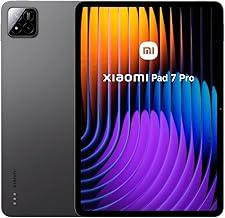
Xiaomi Pad 7 Pro significantly outperforms the Lenovo Tab P11 Gen 2 in nearly every meaningful dimension. Running Snapdragon 8s Gen 3 with 8GB RAM versus MediaTek Helio G99 with 4-6GB delivers substantially better multitasking and gaming performance. Display quality favors Xiaomi with 3200 x 2136 resolution at 144Hz refresh rate compared to 2000 x 1200 at 120Hz, resulting in noticeably sharper visuals. Battery capacity edges higher at 8850mAh with superior 12-hour video playback endurance. Xiaomi also includes dual cameras, USB-C 3.2, and Wi-Fi 7 connectivity versus the Lenovo's USB-C 2.0 and Wi-Fi 6. Both support styluses, but Xiaomi's larger storage options and expandable options differ. At $399 versus $229, Xiaomi demands premium pricing, yet the performance and feature gap justifies the investment for users prioritizing power and visual fidelity. Lenovo suits budget-conscious buyers accepting modest specifications.
Who Should Buy
Buy the Lenovo Tab P11 (2nd Gen) if…
- →120Hz display is very smooth for scrolling and media at this price
- →Optional stylus and keyboard accessories for productivity
- →MicroSD card expansion for additional storage
Buy the Xiaomi Pad 7 Pro if…
- →Snapdragon 8s Gen 3 chip delivers strong performance for the price
- →144Hz 3.2K display is excellent for media and gaming
- →Aggressive $399 pricing undercuts iPad Air significantly
Category Scores
Pros & Cons
Lenovo Tab P11 (2nd Gen)
Pros
- 120Hz display is very smooth for scrolling and media at this price
- Optional stylus and keyboard accessories for productivity
- MicroSD card expansion for additional storage
- Quad speakers with Dolby Atmos for good audio
- Lightweight at 520 g for comfortable handheld use
Cons
- Helio G99 is a low-power chip — struggles with heavy apps
- 4 GB base RAM is tight for multitasking
- IPS LCD has limited contrast compared to AMOLED options
- USB-C 2.0 limits data transfer speeds
- Camera quality is poor for anything beyond video calls
Xiaomi Pad 7 Pro
Pros
- Snapdragon 8s Gen 3 chip delivers strong performance for the price
- 144Hz 3.2K display is excellent for media and gaming
- Aggressive $399 pricing undercuts iPad Air significantly
- Xiaomi Focus Pen support for note-taking and drawing
- Wi-Fi 7 and USB-C 3.2 for fast connectivity
Cons
- HyperOS tablet optimization is behind Samsung's One UI
- No OLED or mini-LED display
- Limited global availability outside China
- No cellular option for on-the-go connectivity
Full Specifications
| Spec | Lenovo Tab P11 (2nd Gen) | Xiaomi Pad 7 Pro |
|---|---|---|
| Software | Android 13 | Android 14 (HyperOS) |
| Body | ||
| Weight | 520 g | 500 g |
| Dimensions | 269.6 x 173.9 x 7.45 mm | 253.6 x 166.5 x 6.4 mm |
| Battery | ||
| Battery life | Up to 10 hours | Up to 12 hours video playback |
| Capacity | 7700 mAh | 8850 mAh |
| Display | ||
| Size | 11.5 inches | 11.2 inches |
| Type | IPS LCD | IPS LCD |
| Resolution | 2000 x 1200 | 3200 x 2136 |
| Refresh rate | 120Hz | 144Hz |
| Storage | ||
| Storage options | 64 GB, 128 GB | 128 GB, 256 GB |
| Expandable storage | ||
| Processor | ||
| RAM | 4 GB / 6 GB | 8 GB |
| Chipset | MediaTek Helio G99 | Qualcomm Snapdragon 8s Gen 3 |
| Connectivity | ||
| USB | USB-C 2.0 | USB-C 3.2 |
| Wi-Fi | Wi-Fi 6 | Wi-Fi 7 |
| Cellular | ||
| Stylus Support | ||
| Cameras | ||
| Rear | — | 13 MP wide |
| Front camera | — | 8 MP wide |
Related Comparisons
This comparison is based on verified manufacturer specifications covering display, performance, camera, battery, and build quality. Scores are generated by analyzing specs across weighted categories on a 10-point scale. Learn more about our methodology.
Explore more in tablets, see all Lenovo products or all Xiaomi products. View full details for the Lenovo Tab P11 (2nd Gen) or the Xiaomi Pad 7 Pro.