INFOBAR ZERO vs Xiaomi 12

How They Compare
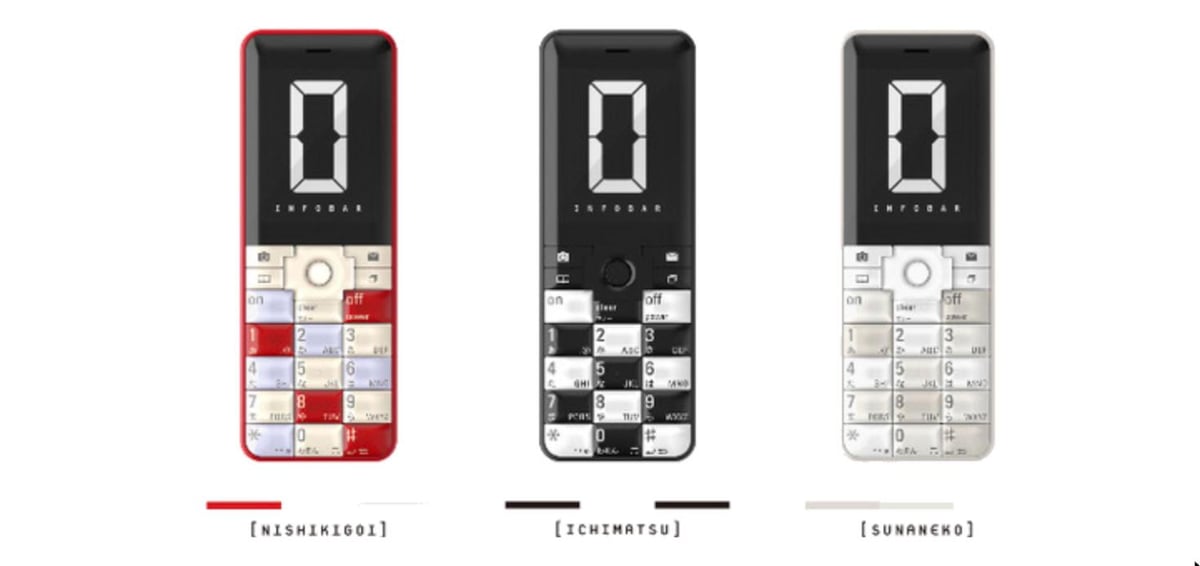
The INFOBAR ZERO and Xiaomi 12 sit in the same category and end up appealing to slightly different buyers. The INFOBAR ZERO is the cheaper of the two at $219 versus $749, a difference of about $530. The spec table below ranks 8 of their differences, and they do not all point the same way: the INFOBAR ZERO wins on weight (128 g vs 180 g), the Xiaomi 12 on battery capacity (4500 mAh vs 2,055 mAh) and screen size (6.28 inches vs 2.4 inches). The INFOBAR ZERO is the newer of the two, released in 2026 against 2022. The pros lists below lead with — INFOBAR ZERO: Iconic Naoto Fukasawa INFOBAR design in three colours; Xiaomi 12: Compact flagship at 6.28 inches. Use the side-by-side spec table below to compare display, camera, processor and battery in detail and decide which one fits your priorities.
Who Should Buy
Buy the INFOBAR ZERO if…
- →Iconic Naoto Fukasawa INFOBAR design in three colours
- →Long standby from the 2,055 mAh battery
- →USB-C charging, Bluetooth and Wi-Fi on a distraction-free phone
Buy the Xiaomi 12 if…
- →Compact flagship at 6.28 inches
- →67W wired and 50W wireless charging
- →Good 50 MP main camera with OIS
Pros & Cons
INFOBAR ZERO
Pros
- Iconic Naoto Fukasawa INFOBAR design in three colours
- Long standby from the 2,055 mAh battery
- USB-C charging, Bluetooth and Wi-Fi on a distraction-free phone
- Sold SIM-free and works with au, povo2.0 and second-number plans
Cons
- No web browser or apps by design
- No water or dust resistance
- 2 MP camera and small 2.4-inch screen
- Expensive for a feature phone
Xiaomi 12
Pros
- Compact flagship at 6.28 inches
- 67W wired and 50W wireless charging
- Good 50 MP main camera with OIS
- Lightweight at 180 g
- Harman Kardon stereo speakers
Cons
- Snapdragon 8 Gen 1 runs hot
- No telephoto camera
- 13 MP ultrawide is weak
- No official IP rating
- MIUI 13 bloatware
Full Specifications
| Spec | INFOBAR ZERO | Xiaomi 12 |
|---|---|---|
| Software | Proprietary feature phone software (no apps, no web browser) | Android 12, MIUI 13 |
| Body | ||
| Colors | NISHIKIGOI, ICHIMATSU, SUNANEKO | — |
| Weight | 128 g | 180 g |
| Designer | Naoto Fukasawa (au Design project) | — |
| Dimensions | 138 x 50 x 13.0 mm | 152.7 x 69.9 x 8.16 mm |
| Form factor | Candybar feature phone | — |
| Water resistance | Not water or dust resistant | — |
| Material | — | Aluminum frame, Gorilla Glass Victus |
| IP rating | — | No official rating |
| Camera | ||
| Main camera | 2 MP | 50 MP, f/1.9, OIS (Sony IMX766) |
| Front camera | — | 32 MP, f/2.45 |
| Macro | — | 5 MP, f/2.4 |
| Video | — | 8K@24fps, 4K@60fps |
| Ultrawide | — | 13 MP, f/2.4 |
| Memory | ||
| RAM | 1 GB | 8 GB |
| Storage options | 8 GB | 128 GB, 256 GB |
| Battery | ||
| Standby | About 240 hours (4G LTE) | — |
| Capacity | 2,055 mAh | 4500 mAh |
| Charging | USB-C | 67W wired |
| Talk Time | About 360 minutes (VoLTE) | — |
| Wireless charging | — | 50W wireless |
| Display | ||
| Size | 2.4 inches | 6.28 inches |
| Type | TFT | AMOLED |
| Resolution | 480 x 640 pixels (VGA) | 2400 x 1080 |
| Refresh rate | — | 120Hz |
| Brightness (nits) | — | 1100 |
| Features | Calls, SMS, camera, contacts, calendar, alarm, music player, calculator | — |
| Processor | ||
| Chipset | MediaTek MT8765WA | Qualcomm Snapdragon 8 Gen 1 |
| CPU | — | Octa-core (1x3.0 GHz + 3x2.5 GHz + 4x1.8 GHz) |
| GPU | — | Adreno 730 |
| Connectivity | ||
| NFC | No (no FeliCa) | |
| USB | USB-C | USB-C 2.0 |
| Wi-Fi | Wi-Fi 4 (802.11 b/g/n, 2.4 GHz) | Wi-Fi 6 |
| Network | 4G LTE (calls, SMS); no 5G | — |
| Bluetooth | 4.2 | 5.2 |
| 5G | Not stated | |
Want to compare a third product?
Add another product for a 3-way comparison.
Related Comparisons
Explore more in phones, see all KDDI products or all Xiaomi products. View full details for the INFOBAR ZERO or the Xiaomi 12.