INFOBAR ZERO vs Poco C81 Pro

How They Compare
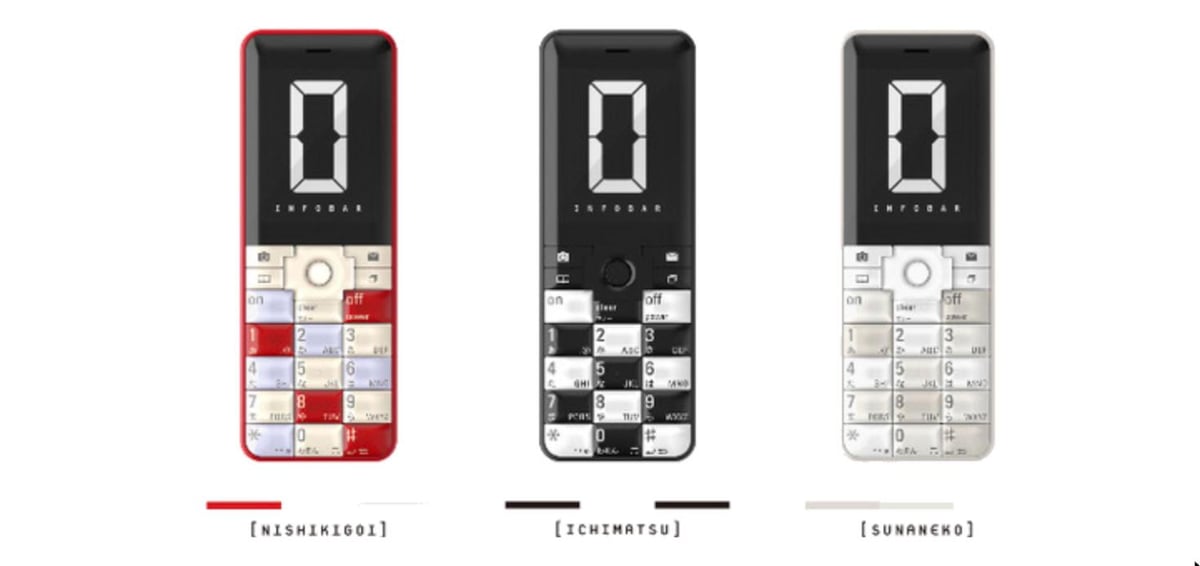
The INFOBAR ZERO and Poco C81 Pro sit in the same category and end up appealing to slightly different buyers. The Poco C81 Pro is the cheaper of the two at $109 versus $219, a difference of about $110. The spec table below ranks 6 of their differences, and they do not all point the same way: the INFOBAR ZERO wins on weight (128 g vs 208 g), the Poco C81 Pro on battery capacity (6000 mAh vs 2,055 mAh) and screen size (6.9 inches vs 2.4 inches). The pros lists below lead with — INFOBAR ZERO: Iconic Naoto Fukasawa INFOBAR design in three colours; Poco C81 Pro: 6,000 mAh battery in a phone that costs around $109. Use the side-by-side spec table below to compare display, camera, processor and battery in detail and decide which one fits your priorities.
Who Should Buy
Buy the INFOBAR ZERO if…
- →Iconic Naoto Fukasawa INFOBAR design in three colours
- →Long standby from the 2,055 mAh battery
- →USB-C charging, Bluetooth and Wi-Fi on a distraction-free phone
Buy the Poco C81 Pro if…
- →6,000 mAh battery in a phone that costs around $109
- →6.9-inch screen running at up to 120Hz, which is unusual this cheap
- →Dedicated microSD slot alongside up to 256GB of built-in storage
Pros & Cons
INFOBAR ZERO
Pros
- Iconic Naoto Fukasawa INFOBAR design in three colours
- Long standby from the 2,055 mAh battery
- USB-C charging, Bluetooth and Wi-Fi on a distraction-free phone
- Sold SIM-free and works with au, povo2.0 and second-number plans
Cons
- No web browser or apps by design
- No water or dust resistance
- 2 MP camera and small 2.4-inch screen
- Expensive for a feature phone
Poco C81 Pro
Pros
- 6,000 mAh battery in a phone that costs around $109
- 6.9-inch screen running at up to 120Hz, which is unusual this cheap
- Dedicated microSD slot alongside up to 256GB of built-in storage
- Reverse wired charging can top up an accessory
Cons
- 720 x 1600 on a 6.9-inch panel is a low pixel density — text looks soft
- Unisoc T7250 with 4GB of RAM is entry-level, and there is no larger memory option
- A single 13MP rear camera, with no ultrawide
- 15W charging is slow for a 6,000 mAh cell
Full Specifications
| Spec | INFOBAR ZERO | Poco C81 Pro |
|---|---|---|
| Software | Proprietary feature phone software (no apps, no web browser) | — |
| Body | ||
| Colors | NISHIKIGOI, ICHIMATSU, SUNANEKO | Black, Gold, Green |
| Weight | 128 g | 208 g |
| Designer | Naoto Fukasawa (au Design project) | — |
| Dimensions | 138 x 50 x 13.0 mm | 171.6 x 79.5 x 8.2 mm |
| Form factor | Candybar feature phone | — |
| Water resistance | Not water or dust resistant | — |
| IP rating | — | IP52 |
| Camera | ||
| Main camera | 2 MP | 13 MP, f/2.2, 1/3.06-inch, 1.12 µm, PDAF + CDAF, 80° FOV |
| Front camera | — | 8 MP, f/2.0 |
| Memory | ||
| RAM | 1 GB | 4 GB |
| Storage options | 8 GB | 64 GB, 128 GB, 256 GB |
| Expandable storage | — | microSDXC |
| Battery | ||
| Standby | About 240 hours (4G LTE) | — |
| Capacity | 2,055 mAh | 6000 mAh |
| Charging | USB-C | 15W wired, 7.5W reverse wired |
| Talk Time | About 360 minutes (VoLTE) | — |
| Wireless charging | — | No |
| Display | ||
| Size | 2.4 inches | 6.9 inches |
| Type | TFT | IPS LCD |
| Resolution | 480 x 640 pixels (VGA) | 720 x 1600 |
| Refresh rate | — | 120Hz (60/90/120 selectable) |
| Brightness (nits) | — | 650 typical / 800 peak |
| Features | Calls, SMS, camera, contacts, calendar, alarm, music player, calculator | — |
| Processor | ||
| Chipset | MediaTek MT8765WA | Unisoc T7250 (12 nm) |
| CPU | — | Octa-core (2x1.8 GHz Cortex-A75, 6x1.6 GHz Cortex-A55) |
| GPU | — | Mali-G57 MP1 |
| Connectivity | ||
| NFC | No (no FeliCa) | — |
| USB | USB-C | — |
| Wi-Fi | Wi-Fi 4 (802.11 b/g/n, 2.4 GHz) | — |
| Network | 4G LTE (calls, SMS); no 5G | — |
| Bluetooth | 4.2 | — |
Want to compare a third product?
Add another product for a 3-way comparison.
Related Comparisons
Explore more in phones, see all KDDI products or all Poco products. View full details for the INFOBAR ZERO or the Poco C81 Pro.