INFOBAR ZERO vs OnePlus 12

How They Compare
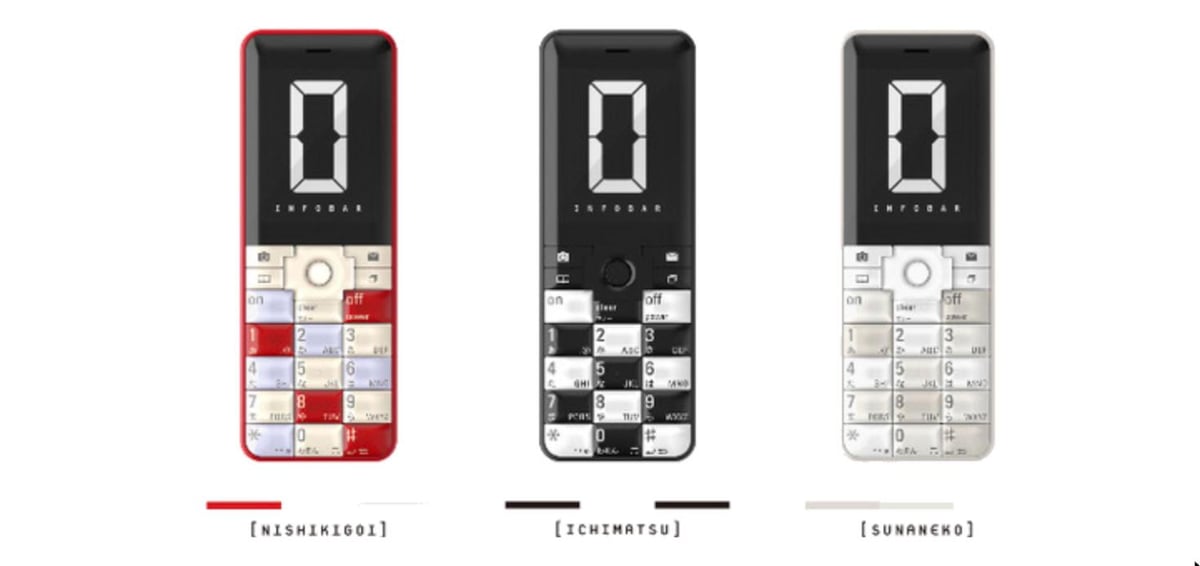
The INFOBAR ZERO and OnePlus 12 sit in the same category and end up appealing to slightly different buyers. The INFOBAR ZERO is the cheaper of the two at $219 versus $799, a difference of about $580. The spec table below ranks 8 of their differences, and they do not all point the same way: the INFOBAR ZERO wins on weight (128 g vs 220 g), the OnePlus 12 on battery capacity (5400 mAh vs 2,055 mAh) and screen size (6.82 inches vs 2.4 inches). The INFOBAR ZERO is the newer of the two, released in 2026 against 2024. The pros lists below lead with — INFOBAR ZERO: Iconic Naoto Fukasawa INFOBAR design in three colours; OnePlus 12: Blistering 4500-nit peak display brightness. Use the side-by-side spec table below to compare display, camera, processor and battery in detail and decide which one fits your priorities.
Who Should Buy
Buy the INFOBAR ZERO if…
- →Iconic Naoto Fukasawa INFOBAR design in three colours
- →Long standby from the 2,055 mAh battery
- →USB-C charging, Bluetooth and Wi-Fi on a distraction-free phone
Buy the OnePlus 12 if…
- →Blistering 4500-nit peak display brightness
- →Snapdragon 8 Gen 3 flagship performance
- →100W wired and 50W wireless charging
Pros & Cons
INFOBAR ZERO
Pros
- Iconic Naoto Fukasawa INFOBAR design in three colours
- Long standby from the 2,055 mAh battery
- USB-C charging, Bluetooth and Wi-Fi on a distraction-free phone
- Sold SIM-free and works with au, povo2.0 and second-number plans
Cons
- No web browser or apps by design
- No water or dust resistance
- 2 MP camera and small 2.4-inch screen
- Expensive for a feature phone
OnePlus 12
Pros
- Blistering 4500-nit peak display brightness
- Snapdragon 8 Gen 3 flagship performance
- 100W wired and 50W wireless charging
- 64 MP 3x periscope telephoto
- Large 5400 mAh battery
Cons
- Only IP65 rating (vs IP68 on rivals)
- Heavy at 220 g
- Limited to 4 years of OS updates
- No mmWave 5G in US
Full Specifications
| Spec | INFOBAR ZERO | OnePlus 12 |
|---|---|---|
| Software | Proprietary feature phone software (no apps, no web browser) | Android 14 (OxygenOS 14) |
| Body | ||
| Colors | NISHIKIGOI, ICHIMATSU, SUNANEKO | — |
| Weight | 128 g | 220 g |
| Designer | Naoto Fukasawa (au Design project) | — |
| Dimensions | 138 x 50 x 13.0 mm | 164.3 x 75.8 x 9.2 mm |
| Form factor | Candybar feature phone | — |
| Water resistance | Not water or dust resistant | — |
| Material | — | Aluminum frame, Gorilla Glass Victus 2 |
| IP rating | — | IP65 |
| Camera | ||
| Main camera | 2 MP | 50 MP, f/1.6, OIS (Sony LYT-808) |
| Front camera | — | 32 MP, f/2.4 |
| Video | — | 8K@24fps, 4K@60fps |
| Telephoto | — | 64 MP, f/2.6, 3x optical periscope |
| Ultrawide | — | 48 MP, f/2.2, 114-degree |
| Memory | ||
| RAM | 1 GB | 12 GB |
| Storage options | 8 GB | 256 GB, 512 GB |
| Battery | ||
| Standby | About 240 hours (4G LTE) | — |
| Capacity | 2,055 mAh | 5400 mAh |
| Charging | USB-C | 100W SuperVOOC wired (80W in US) |
| Talk Time | About 360 minutes (VoLTE) | — |
| Wireless charging | — | 50W AirVOOC |
| Display | ||
| Size | 2.4 inches | 6.82 inches |
| Type | TFT | LTPO AMOLED |
| Resolution | 480 x 640 pixels (VGA) | 3168 x 1440 |
| Refresh rate | — | 1-120Hz |
| Brightness (nits) | — | 4500 |
| Features | Calls, SMS, camera, contacts, calendar, alarm, music player, calculator | — |
| Processor | ||
| Chipset | MediaTek MT8765WA | Qualcomm Snapdragon 8 Gen 3 |
| CPU | — | Octa-core (1x3.3 GHz Cortex-X4 & 3x3.2 GHz Cortex-A720 & 2x3.0 GHz Cortex-A720 & 2x2.3 GHz Cortex-A520) |
| GPU | — | Adreno 750 |
| Connectivity | ||
| NFC | No (no FeliCa) | |
| USB | USB-C | USB-C 3.2 |
| Wi-Fi | Wi-Fi 4 (802.11 b/g/n, 2.4 GHz) | Wi-Fi 7 |
| Network | 4G LTE (calls, SMS); no 5G | — |
| Bluetooth | 4.2 | 5.4 |
| 5G | Not stated | |
Want to compare a third product?
Add another product for a 3-way comparison.
Related Comparisons
Explore more in phones, see all KDDI products or all OnePlus products. View full details for the INFOBAR ZERO or the OnePlus 12.