Huawei MatePad Pro 13.2 vs Xiaomi Pad 9 Pro Max

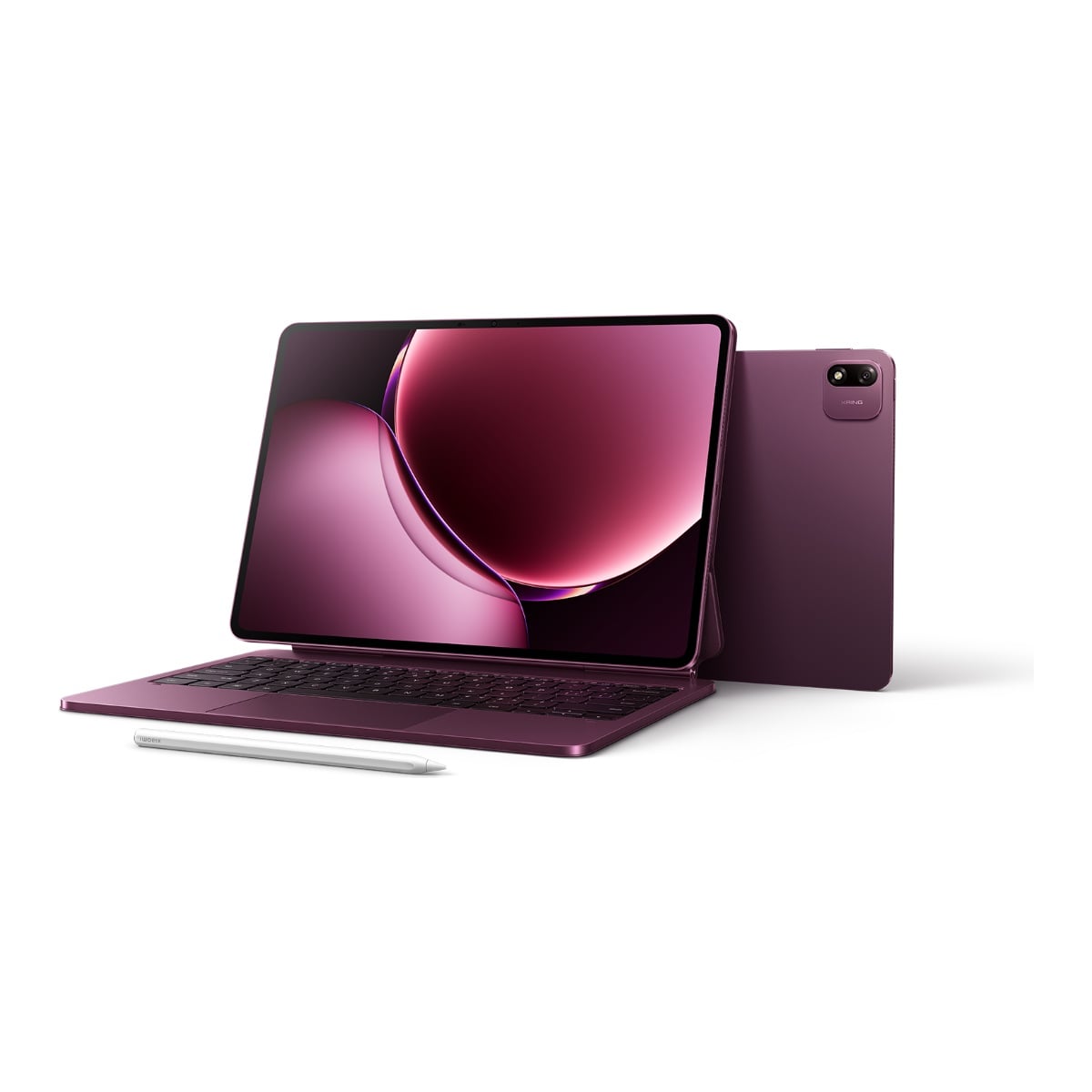
How They Compare
The Huawei MatePad Pro 13.2 and Xiaomi Pad 9 Pro Max sit in the same category and end up appealing to slightly different buyers. The Xiaomi Pad 9 Pro Max is the cheaper of the two at $715 versus $999, a difference of about $284. The spec table below ranks 8 of their differences, and they do not all point the same way: the Huawei MatePad Pro 13.2 wins on weight (580 g vs 645g), the Xiaomi Pad 9 Pro Max on battery capacity (12000 mAh vs 10100 mAh) and charging (120W wired vs 100W wired, 50W wireless charging). The Xiaomi Pad 9 Pro Max is the newer of the two, released in 2026 against 2023. The pros lists below lead with — Huawei MatePad Pro 13.2: Massive 13.2-inch 144Hz OLED display; Xiaomi Pad 9 Pro Max: 13.3-inch 3.4K 144Hz panel in a 3:2 aspect suited to work. Use the side-by-side spec table below to compare display, cameras, processor and battery in detail and decide which one fits your priorities.
Who Should Buy
Buy the Huawei MatePad Pro 13.2 if…
- →Massive 13.2-inch 144Hz OLED display
- →Extremely thin 5.5 mm chassis at only 580 g
- →Very fast 100W wired and 50W wireless charging
Buy the Xiaomi Pad 9 Pro Max if…
- →13.3-inch 3.4K 144Hz panel in a 3:2 aspect suited to work
- →12,000 mAh battery with 120W charging
- →DP-in over USB-C lets it act as an external monitor
Pros & Cons
Huawei MatePad Pro 13.2
Pros
- Massive 13.2-inch 144Hz OLED display
- Extremely thin 5.5 mm chassis at only 580 g
- Very fast 100W wired and 50W wireless charging
- Nano memory card expansion
- Premium build and quad speakers
Cons
- No Google Mobile Services (HarmonyOS app gap)
- No cellular variant in most markets
- Limited Western retail availability
- Kirin 9000s trails latest Snapdragon flagships
Xiaomi Pad 9 Pro Max
Pros
- 13.3-inch 3.4K 144Hz panel in a 3:2 aspect suited to work
- 12,000 mAh battery with 120W charging
- DP-in over USB-C lets it act as an external monitor
- Xiaomi in-house Xring O3 with a 16-core GPU
Cons
- China-only at launch with no confirmed global pricing
- 645g is heavy to hold for long stretches
- 1,000 nits trails the brightest tablets in this class
- Android tablet software still lags iPadOS for large-screen apps
Full Specifications
| Spec | Huawei MatePad Pro 13.2 | Xiaomi Pad 9 Pro Max |
|---|---|---|
| Software | HarmonyOS 4.0 | HyperOS 4 |
| Body | ||
| Weight | 580 g | 645g |
| Dimensions | 289.0 x 195.2 x 5.5 mm | — |
| Colors | — | Burgundy, Black, Silver |
| Battery | ||
| Capacity | 10100 mAh | 12000 mAh |
| Charging | 100W wired, 50W wireless charging | 120W wired |
| Cameras | ||
| Rear | 13 MP main + 8 MP ultrawide | 50MP |
| Front camera | 16 MP | 32MP |
| Display | ||
| Overview | — | 13.3-inch 3.4K, 3:2 aspect |
| Size | 13.2 inches | 13.3-inch |
| Type | OLED, 144Hz, 1000 nits | — |
| Resolution | 2880 x 1920 | 3408 x 2272 |
| Refresh rate | 144Hz | 144Hz |
| Brightness (nits) | — | 1000 nits |
| Storage | ||
| Storage options | 256 GB, 512 GB, 1 TB | 256GB, 512GB, 1TB |
| Expandable storage | Not stated | |
| Processor | ||
| RAM | 12 GB LPDDR5 | — |
| Chipset | HiSilicon Kirin 9000s | Xiaomi Xring O3, 10-core, up to 4.35GHz |
| GPU | — | G2-Ultra NX (16-core) |
| Connectivity | ||
| USB | USB-C 3.1 | full-function USB-C with DP-in video input |
| Wi-Fi | Wi-Fi 6 | Wi-Fi 7 |
| Cellular | Not stated | |
| Stylus Support | Not stated | |
| Speakers | — | 8 speakers with Dolby Atmos |
| Thickness | — | 5.67mm |
| RAM Options | — | 8GB, 12GB, 16GB |
| Color Accuracy | — | Delta E approx 0.47 |
Want to compare a third product?
Add another product for a 3-way comparison.
Related Comparisons
- Huawei MatePad Pro 13.2 vs Apple iPad Pro 13" (M5, 2025)
- Huawei MatePad Pro 13.2 vs Apple iPad Pro M4 11-inch
- Huawei MatePad Pro 13.2 vs Apple iPad Pro M4 13-inch
- Huawei MatePad Pro 13.2 vs Microsoft Surface Pro 11 (Tablet)
- Huawei MatePad Pro 13.2 vs Apple iPad Air M3 13-inch
- Huawei MatePad Pro 13.2 vs Apple iPad Pro 11" (M5, 2025)
Explore more in tablets, see all Huawei products or all Xiaomi products. View full details for the Huawei MatePad Pro 13.2 or the Xiaomi Pad 9 Pro Max.