HP ZBook Studio G10 vs Valve Steam Deck OLED

The Verdict
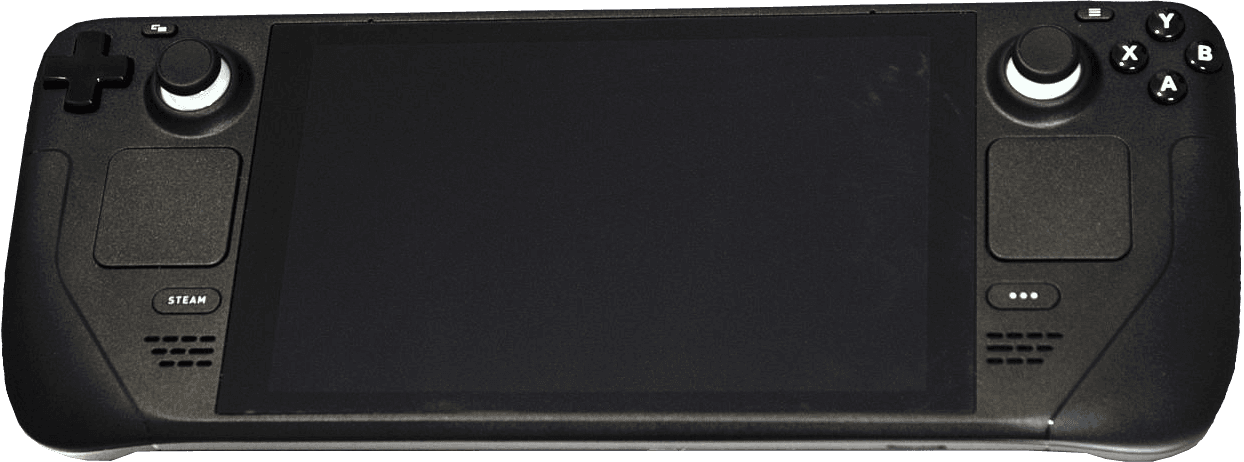
These devices serve entirely different purposes despite both being classified as laptops. The HP ZBook Studio G10 is a professional workstation designed for creative professionals, featuring a 16-inch 3840x2400 OLED display, Intel Core i9-13900H processor, 32GB DDR5 RAM, and comprehensive connectivity with Thunderbolt ports. Battery life reaches 9 hours, weighs 3.96 lbs, and includes a full SD card reader plus dual USB-A ports. The Valve Steam Deck OLED is a portable gaming handheld with a 7.4-inch 1280x800 OLED screen, AMD custom APU, 16GB RAM, and microSD expansion. It delivers 3-12 hours depending on game intensity and emphasizes portability at 640g. The ZBook dominates for professional work, video editing, 3D rendering, and general computing with superior processing power, RAM, and screen real estate. The Steam Deck excels as a gaming device offering an entire Steam library in handheld form with excellent display quality for its size. Choosing between them depends entirely on your needs: professionals and content creators need the ZBook, while gamers wanting portable AAA titles want the Steam Deck. They're not competitors but complementary devices for different use cases.
Who Should Buy
Buy the HP ZBook Studio G10 if…
- →4K OLED DreamColor display with 100% DCI-P3 for color-critical work
- →NVIDIA RTX 4070/4080 Laptop GPU with ISV certifications
- →120Hz refresh rate on the OLED panel — rare for a workstation
Buy the Valve Steam Deck OLED if…
- →Gorgeous HDR OLED display with 1000-nit peak brightness and true blacks
- →90Hz refresh rate is noticeably smoother than the original LCD model
- →Access to entire Steam library with Proton compatibility layer
Category Scores
Pros & Cons
HP ZBook Studio G10
Pros
- 4K OLED DreamColor display with 100% DCI-P3 for color-critical work
- NVIDIA RTX 4070/4080 Laptop GPU with ISV certifications
- 120Hz refresh rate on the OLED panel — rare for a workstation
- Under 4 lbs — remarkably light for a 16-inch mobile workstation
- Comprehensive port selection including HDMI and SD card reader
Cons
- Starting price of $2,599 climbs quickly with GPU upgrades
- OLED panel may have burn-in risk with static UI elements
- Fan noise is noticeable under sustained workstation loads
- 86 Wh battery drops to 4-5 hours under GPU-heavy workflows
- 32 GB max soldered RAM limits future-proofing on some configs
Valve Steam Deck OLED
Pros
- Gorgeous HDR OLED display with 1000-nit peak brightness and true blacks
- 90Hz refresh rate is noticeably smoother than the original LCD model
- Access to entire Steam library with Proton compatibility layer
- 50 Wh battery provides 30-50% more playtime than LCD model
- Wi-Fi 6E and Bluetooth 5.3 are significant connectivity upgrades
Cons
- 1280 x 800 resolution limits sharpness on the 7.4-inch display
- 640 g is heavy for extended handheld gaming sessions
- Zen 2 CPU is aging and struggles with the latest AAA titles at high settings
- Battery life as low as 3 hours in demanding games
- No built-in kickstand for tabletop or docked play
Full Specifications
| Spec | HP ZBook Studio G10 | Valve Steam Deck OLED |
|---|---|---|
| Software | Windows 11 Pro | SteamOS 3.0 (Arch-based Linux) |
| Body | ||
| Weight | 3.96 lbs (1.80 kg) | 640 g |
| Material | Aluminum | Plastic chassis with aluminum brackets |
| Dimensions | 14.04 x 9.71 x 0.71 inches | 298 x 117 x 49 mm |
| Ports | ||
| HDMI | — | |
| USB-A ports | 2 | — |
| USB-C ports | 2 | 1 |
| SD card | — | |
| Thunderbolt ports | 2 | — |
| Microsd | — | |
| Headphone Jack | — | |
| Battery | ||
| Battery life | Up to 9 hours | 3-12 hours (game dependent) |
| Capacity | 86 Wh | 50 Wh |
| Display | ||
| Size | 16 inches | 7.4 inches |
| Type | OLED DreamColor | HDR OLED |
| Resolution | 3840 x 2400 | 1280 x 800 |
| Refresh rate | 120Hz | 90Hz |
| Brightness (nits) | 500 | 1000 |
| Storage | ||
| SSD | 1 TB PCIe Gen 4 NVMe | — |
| Expandable storage | — | |
| Keyboard | ||
| Backlit | — | |
| Processor | ||
| RAM | 32 GB DDR5 | 16 GB LPDDR5 (6400 MT/s) |
| Cores | 14 cores (6P + 8E) | 4-core CPU, 8-core RDNA 2 GPU |
| Chipset | Intel Core i9-13900H (13th Gen) | AMD custom APU (Zen 2, 4-core / 8-thread, 2.4-3.5 GHz) |
| Memory | ||
| Storage options | — | 512 GB NVMe SSD, 1 TB NVMe SSD |
| Connectivity | ||
| Wi-Fi | — | Wi-Fi 6E |
| Bluetooth | — | 5.3 |
Want to compare a third product?
Add another product for a 3-way comparison.
Related Comparisons
- Valve Steam Deck OLED vs Samsung Galaxy Book5 Pro
- Valve Steam Deck OLED vs Samsung Galaxy Book4 Ultra
- Valve Steam Deck OLED vs Samsung Galaxy Book4 Pro 360
- Valve Steam Deck OLED vs Samsung Galaxy Book4 Pro
- Valve Steam Deck OLED vs Samsung Galaxy Book4 360
- Valve Steam Deck OLED vs Samsung Galaxy Book3 Ultra
This comparison is based on verified manufacturer specifications covering display, performance, camera, battery, and build quality. Scores are generated by analyzing specs across weighted categories on a 10-point scale. Learn more about our methodology.
Explore more in laptops, see all HP products or all Valve products. View full details for the HP ZBook Studio G10 or the Valve Steam Deck OLED.