Hisense U6SF 50" (Mini-LED QLED) vs Samsung S95D 65"

How They Compare
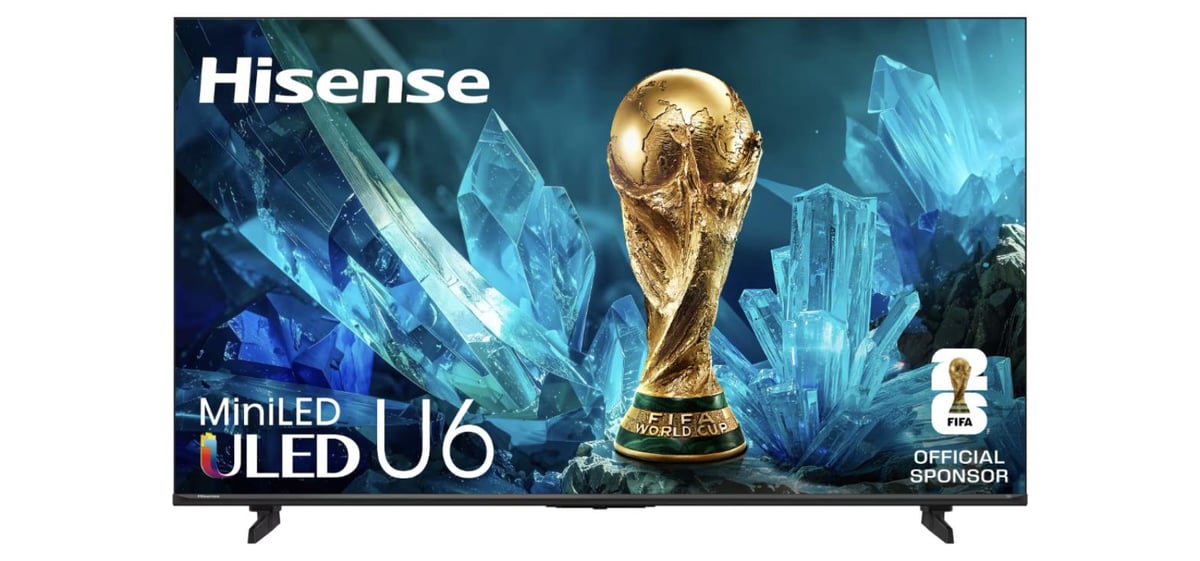
The Hisense U6SF 50" (Mini-LED QLED) and Samsung S95D 65" sit in the same category, and on the specifications this page can rank they do not come out level. The Hisense U6SF 50" (Mini-LED QLED) is the cheaper of the two at $700 versus $2,599, a difference of about $1,899. The spec table below ranks one of their differences, and every one of them goes to the Samsung S95D 65" — including screen size (65" vs 50-inch). The Hisense U6SF 50" (Mini-LED QLED) is the newer of the two, released in 2026 against 2024. The pros lists below lead with — Hisense U6SF 50" (Mini-LED QLED): Native 144Hz panel at the entry size; Samsung S95D 65": Matte anti-glare coating on an OLED panel — best-in-class reflection handling. Use the side-by-side spec table below to compare display, audio, smart tv and gaming in detail and decide which one fits your priorities.
Who Should Buy
Buy the Hisense U6SF 50" (Mini-LED QLED) if…
- →Native 144Hz panel at the entry size
- →144 local dimming zones on a Mini-LED backlight
- →Dolby Vision, HDR10+ and Dolby Atmos
Buy the Samsung S95D 65" if…
- →Matte anti-glare coating on an OLED panel — best-in-class reflection handling
- →QD-OLED achieves some of the highest color volume of any consumer display
- →120Hz panel that reaches 144Hz over PC, with around 9ms of input lag and 0.1ms pixel response, is outstanding for PC and next-gen console gaming
Pros & Cons
Hisense U6SF 50" (Mini-LED QLED)
Pros
- Native 144Hz panel at the entry size
- 144 local dimming zones on a Mini-LED backlight
- Dolby Vision, HDR10+ and Dolby Atmos
- AMD FreeSync Premium
- Two-year warranty
Cons
- 50 inches is small for the money against larger rivals
- Fire TV platform pushes Amazon content hard
- ATSC 1.0 tuner only, no ATSC 3.0
- Brightness trails the U7 and U8 lines
Samsung S95D 65"
Pros
- Matte anti-glare coating on an OLED panel — best-in-class reflection handling
- QD-OLED achieves some of the highest color volume of any consumer display
- 120Hz panel that reaches 144Hz over PC, with around 9ms of input lag and 0.1ms pixel response, is outstanding for PC and next-gen console gaming
- Thin, elegant design with a nearly bezel-free look
- All four HDMI 2.1 ports support 4K@144Hz for future-proofed connectivity
Cons
- Premium $2,599 price is hard to justify over the LG C4 for most buyers
- Tizen OS shows ads and sponsored content on the home screen
- OLED is prone to permanent burn-in with static content over time
- No Dolby Vision — Samsung still uses only HDR10+ for HDR metadata
Full Specifications
| Spec | Hisense U6SF 50" (Mini-LED QLED) | Samsung S95D 65" |
|---|---|---|
| Audio | ||
| Dolby Atmos | ||
| Output (watts) | — | 60 |
| Speakers | — | 4.2.2ch Object Tracking Sound+ |
| Gaming | ||
| VRR (Variable Refresh Rate) | ||
| ALLM | Not stated | |
| Input lag (ms) | — | 9 |
| Display | ||
| HDR | Dolby Vision, HDR10+, HDR10, HLG | Quantum HDR OLED+, HDR10+, HLG |
| Size | 50-inch | 65" |
| Type | Mini-LED QLED with full array local dimming | QD-OLED |
| Motion | AI Smooth Motion, Motion Rate 480 | — |
| Resolution | 4K 2160p | 3840 x 2160 (4K UHD) |
| Refresh rate | native 144Hz | 120Hz (144Hz VRR via PC) |
| Local Dimming Zones | 144 | — |
| Brightness (nits) | — | 2000 |
| Smart TV | ||
| OS | Amazon Fire TV | Tizen OS |
| Apple Support | AirPlay 2, Apple Home | — |
| Voice assistant | Alexa+ | Bixby, Alexa, Google Assistant |
| Body | ||
| VESA mount | — | 400 x 300mm |
| Weight | — | 55.1 lbs |
| Dimensions (w/ stand) | — | 57.0 x 35.9 x 10.9 inches |
| Processor | ||
| Chipset | — | Neural Quantum Processor 4K |
| Connectivity | ||
| Wi-Fi | — | Wi-Fi 6 (802.11ax) |
| Ethernet | Not stated | |
| Bluetooth | — | 5.2 |
| USB ports | — | 2 |
| HDMI ports | — | 4 |
Want to compare a third product?
Add another product for a 3-way comparison.
Related Comparisons
Explore more in tvs, see all Hisense products or all Samsung products. View full details for the Hisense U6SF 50" (Mini-LED QLED) or the Samsung S95D 65".