Haier S80 75-inch (H75S80GUF) vs Samsung S90C 55" (4K OLED)

How They Compare
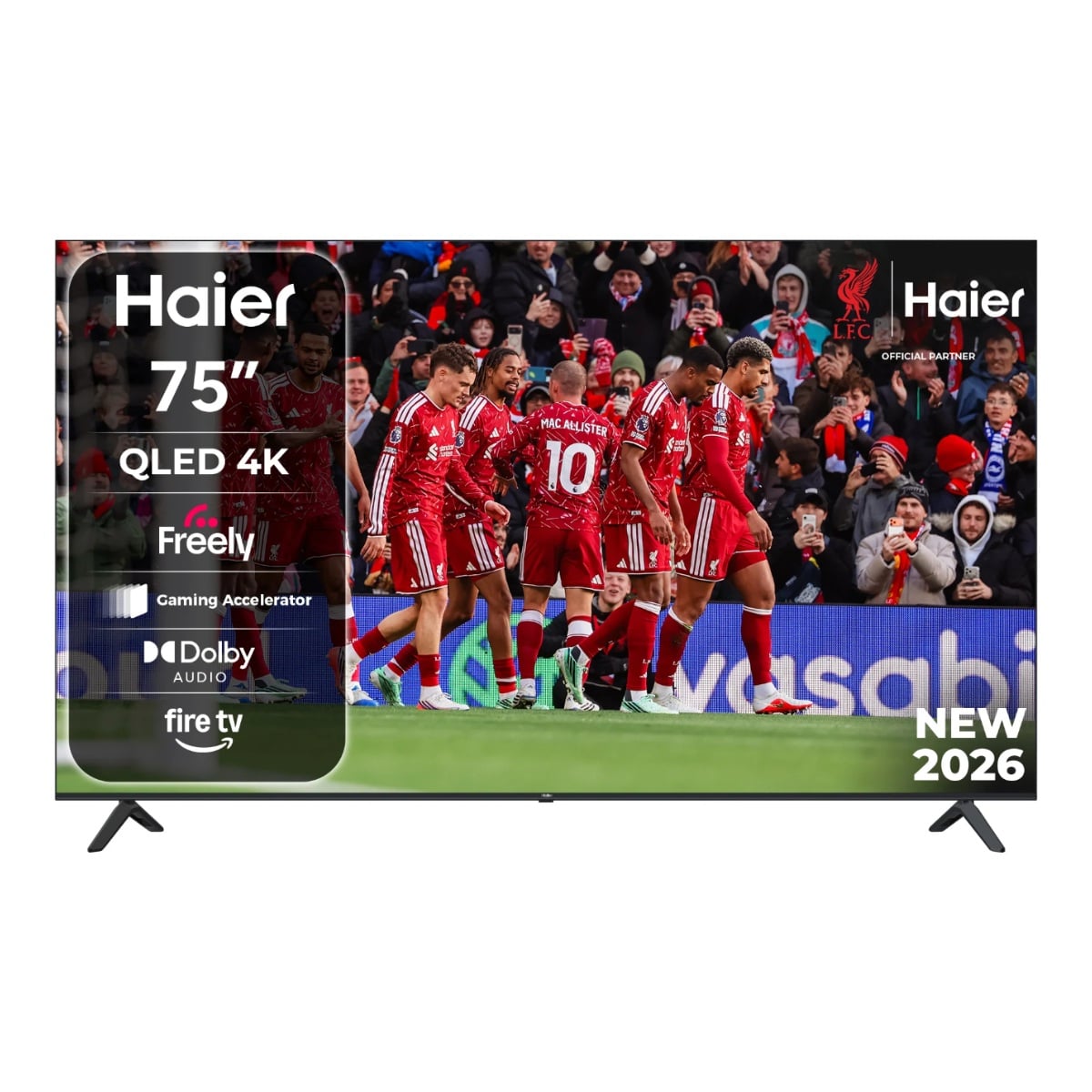
The Haier S80 75-inch (H75S80GUF) and Samsung S90C 55" (4K OLED) sit in the same category and end up appealing to slightly different buyers. The Haier S80 75-inch (H75S80GUF) is the cheaper of the two at $1,071 versus $1,599, a difference of about $528. The spec table below ranks 7 of their differences, and they do not all point the same way: the Haier S80 75-inch (H75S80GUF) wins on screen size (75 inches (74.5-inch viewable) vs 55"), the Samsung S90C 55" (4K OLED) on weight (33.5 lbs vs 19 kg with stand, 18.7 kg without) and Bluetooth (5.2 vs 5.0). The Haier S80 75-inch (H75S80GUF) is the newer of the two, released in 2026 against 2023. The pros lists below lead with — Haier S80 75-inch (H75S80GUF): Large 75-inch QLED 4K panel at a low price; Samsung S90C 55" (4K OLED): QD-OLED at $1,599 is the most affordable OLED with quantum dot color. Use the side-by-side spec table below to compare display, audio, connectivity and smart tv in detail and decide which one fits your priorities.
Who Should Buy
Buy the Haier S80 75-inch (H75S80GUF) if…
- →Large 75-inch QLED 4K panel at a low price
- →Fire TV and Freely built in
- →Three HDMI 2.1 ports with eARC
Buy the Samsung S90C 55" (4K OLED) if…
- →QD-OLED at $1,599 is the most affordable OLED with quantum dot color
- →Infinite contrast ratio with perfect black levels
- →144Hz with VRR — excellent for PS5 and Xbox Series X gaming
Pros & Cons
Haier S80 75-inch (H75S80GUF)
Pros
- Large 75-inch QLED 4K panel at a low price
- Fire TV and Freely built in
- Three HDMI 2.1 ports with eARC
- Alexa voice control
Cons
- Native 60 Hz panel, so no true 120 Hz gaming
- Direct-lit LED with no local dimming specified
- Only 19 W of built-in sound
- UK-specific model
Samsung S90C 55" (4K OLED)
Pros
- QD-OLED at $1,599 is the most affordable OLED with quantum dot color
- Infinite contrast ratio with perfect black levels
- 144Hz with VRR — excellent for PS5 and Xbox Series X gaming
- Vivid, wide color gamut coverage exceeds traditional WOLED
- Ultra-slim panel at 0.4 inches looks stunning mounted
Cons
- 55-inch S90C uses a different (WOLED) panel in some regions — verify before buying
- No Dolby Vision support
- 40W audio is weaker than the S95C — soundbar recommended
- Wi-Fi 5 only on the 55-inch model
Full Specifications
| Spec | Haier S80 75-inch (H75S80GUF) | Samsung S90C 55" (4K OLED) |
|---|---|---|
| Body | ||
| VESA mount | 400 x 300 | 300 x 300mm |
| Weight | 19 kg with stand, 18.7 kg without | 33.5 lbs |
| Dimensions | 1665.4 x 1027.5 x 405 mm with stand | 48.2 x 27.7 x 0.4 inches |
| Form factor | Flat | — |
| Dimensions (w/ stand) | — | 48.2 x 30.2 x 9.3 inches |
| Audio | ||
| Output (watts) | 19 W (2 x 9.5 W) | 40 |
| Speakers | 2.0 channel | 2.1ch |
| Dolby Atmos | Not stated | |
| Power | ||
| On Mode HDR | 210 W | — |
| On Mode Sdr | 105 W | — |
| Energy Class HDR | G | — |
| Energy Class Sdr | E | — |
| Display | ||
| HDR | HDR10 | Quantum HDR OLED, HDR10+, HLG |
| Memc | Yes | — |
| Size | 75 inches (74.5-inch viewable) | 55" |
| Type | QLED, direct-lit LED | QD-OLED |
| Resolution | 4K UHD (3840 x 2160) | 3840 x 2160 (4K) |
| Refresh rate | 60 Hz native (Haier markets AI-boosted 120 Hz motion) | 120Hz (144Hz via Game Mode) |
| Brightness (nits) | — | 1300 |
| Smart TV | ||
| OS | Fire TV (Fire OS 8) | Tizen OS |
| Hbbtv | Yes | — |
| Streaming | Freely (UK) | — |
| Voice assistant | Alexa | Bixby, Alexa, Google Assistant |
| Connectivity | ||
| Wi-Fi | Dual-band 2.4 and 5 GHz | Wi-Fi 5 |
| Ethernet | Yes | |
| Bluetooth | 5.0 | 5.2 |
| Headphone | 3.5 mm | — |
| USB ports | 2 x USB 2.0 | 2 |
| HDMI ports | 3 x HDMI 2.1 (4K 60 Hz, one with eARC) | 4 |
| Gaming | ||
| VRR (Variable Refresh Rate) | Not stated | |
| ALLM | Not stated | |
| Input lag (ms) | — | 6 |
Want to compare a third product?
Add another product for a 3-way comparison.
Related Comparisons
Explore more in tvs, see all Haier products or all Samsung products. View full details for the Haier S80 75-inch (H75S80GUF) or the Samsung S90C 55" (4K OLED).