Google Pixel 7 vs POCO X8 Pro Max

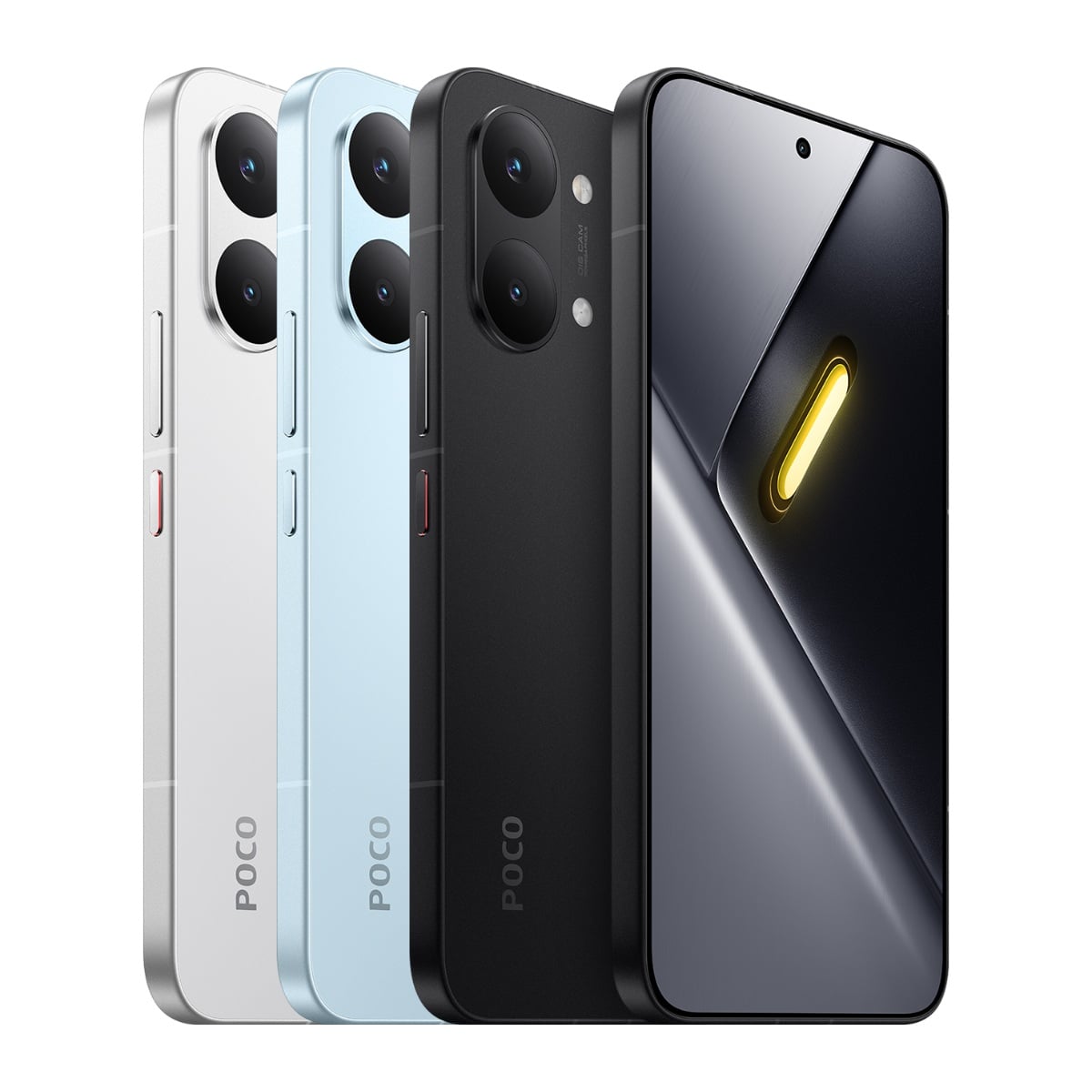
How They Compare
The Google Pixel 7 and POCO X8 Pro Max sit in the same category and end up appealing to slightly different buyers. The POCO X8 Pro Max is the cheaper of the two at $469 versus $599, a difference of about $130. The spec table below ranks 13 of their differences, and they do not all point the same way: the Google Pixel 7 wins on ultra-wide camera (12 MP, f/2.2, 114-degree vs 8 MP) and weight (197 g vs 218 g), the POCO X8 Pro Max on battery capacity (8500 mAh vs 4355 mAh) and charging (100W wired fast charging vs 20W wired (21W peak measured, 50% in 30 min)). The POCO X8 Pro Max is the newer of the two, released in 2026 against 2022. The pros lists below lead with — Google Pixel 7: Clean Android with five years of OS and security updates to October 2027, after Google extended the Pixel 6 and 7 series from the original three; POCO X8 Pro Max: 8,500 mAh battery with 100W HyperCharge is among the largest in any phone at this price. Use the side-by-side spec table below to compare display, camera, processor and battery in detail and decide which one fits your priorities.
Who Should Buy
Buy the Google Pixel 7 if…
- →Clean Android with five years of OS and security updates to October 2027, after Google extended the Pixel 6 and 7 series from the original three
- →Excellent main camera for the money — Night Sight, Photo Unblur and Magic Eraser run on the Tensor G2
- →Compact 6.3-inch flagship at 197g, noticeably easier to hold than the Pro
Buy the POCO X8 Pro Max if…
- →8,500 mAh battery with 100W HyperCharge is among the largest in any phone at this price
- →Dimensity 9500s on a 3 nm process with a Cortex-X925 prime core to 3.73 GHz
- →6.83-inch 2772 x 1280 AMOLED at 3,500 nits peak, with ultrasonic in-display fingerprint reading
Pros & Cons
Google Pixel 7
Pros
- Clean Android with five years of OS and security updates to October 2027, after Google extended the Pixel 6 and 7 series from the original three
- Excellent main camera for the money — Night Sight, Photo Unblur and Magic Eraser run on the Tensor G2
- Compact 6.3-inch flagship at 197g, noticeably easier to hold than the Pro
- IP68 water resistance, aluminium frame and Gorilla Glass Victus
- Competitively priced at $599 for flagship-class computational photography
Cons
- No telephoto lens — zoom is a crop of the main sensor
- Smooth Display steps only between 60Hz and 90Hz, without the Pro's LTPO range
- Only 8 GB RAM
- Slow 20W wired charging, well behind rivals of the same year
- Tensor G2 runs warm under sustained load and trails rival silicon on raw performance
POCO X8 Pro Max
Pros
- 8,500 mAh battery with 100W HyperCharge is among the largest in any phone at this price
- Dimensity 9500s on a 3 nm process with a Cortex-X925 prime core to 3.73 GHz
- 6.83-inch 2772 x 1280 AMOLED at 3,500 nits peak, with ultrasonic in-display fingerprint reading
- Wi-Fi 7 with Multi-Link Operation and Bluetooth 6.0 with LDAC, LHDC 5.0 and Auracast
Cons
- 218 g and 6.83 inches make it a genuinely large phone to hold
- The 8 MP ultra-wide is the weak link in an otherwise flagship-tier sheet
- POCO publishes no wireless charging — the 27W reverse charging is wired only
Full Specifications
| Spec | Google Pixel 7 | POCO X8 Pro Max |
|---|---|---|
| Software | Android 13 at launch, currently Android 17 (OS and security updates to October 2027) | Xiaomi HyperOS 3 |
| Body | ||
| Weight | 197 g | 218 g |
| Material | Aluminum frame, Gorilla Glass Victus | Metal middle frame, Corning Gorilla Glass 7i |
| IP rating | IP68 | IP68 |
| Dimensions | 155.6 x 73.2 x 8.7 mm | 162.9 x 77.9 x 8.2 mm |
| Form factor | — | Bar |
| Camera | ||
| Main camera | 50 MP, f/1.85, OIS | 50 MP Light Fusion 600, f/1.5, OIS |
| Front camera | 10.8 MP, f/2.2 | 20 MP |
| Video | 4K@30/60fps, 1080p@30/60/120/240fps | 4K@30/60fps, 1080p@30/60fps |
| Ultrawide | 12 MP, f/2.2, 114-degree | 8 MP |
| Memory | ||
| RAM | 8 GB | 12 GB LPDDR5X |
| Storage options | 128 GB, 256 GB | 256 GB, 512 GB |
| Battery | ||
| Capacity | 4355 mAh | 8500 mAh |
| Charging | 20W wired (21W peak measured, 50% in 30 min) | 100W wired fast charging |
| Wireless charging | 20W (Pixel Stand 2nd gen) | — |
| Display | ||
| Size | 6.3 inches | 6.83 inches |
| Type | OLED | AMOLED |
| Resolution | 2400 x 1080 | 2772 x 1280 |
| Refresh rate | 90Hz | Up to 120Hz |
| Brightness (nits) | 1400 | 3500 |
| Processor | ||
| CPU | Octa-core (2x2.85 GHz Cortex-X1 & 2x2.35 GHz Cortex-A78 & 4x1.80 GHz Cortex-A55) | 1x Cortex-X925 up to 3.73GHz, 3x Cortex-X4 up to 3.3GHz, 4x Cortex-A720 up to 2.4GHz |
| GPU | Mali-G710 MP7 | Immortalis-G925 MC11 |
| Chipset | Google Tensor G2 | MediaTek Dimensity 9500s |
| Connectivity | ||
| 5G | ||
| NFC | ||
| USB | USB-C 3.2 Gen 2 (10 Gbps) | USB-C |
| Wi-Fi | Wi-Fi 6E | Wi-Fi 7 |
| Bluetooth | 5.2 | 6.0 |
Want to compare a third product?
Add another product for a 3-way comparison.
Related Comparisons
Explore more in phones, see all Google products or all Poco products. View full details for the Google Pixel 7 or the POCO X8 Pro Max.