Google Pixel 7 Pro vs POCO X8 Pro Max

How They Compare
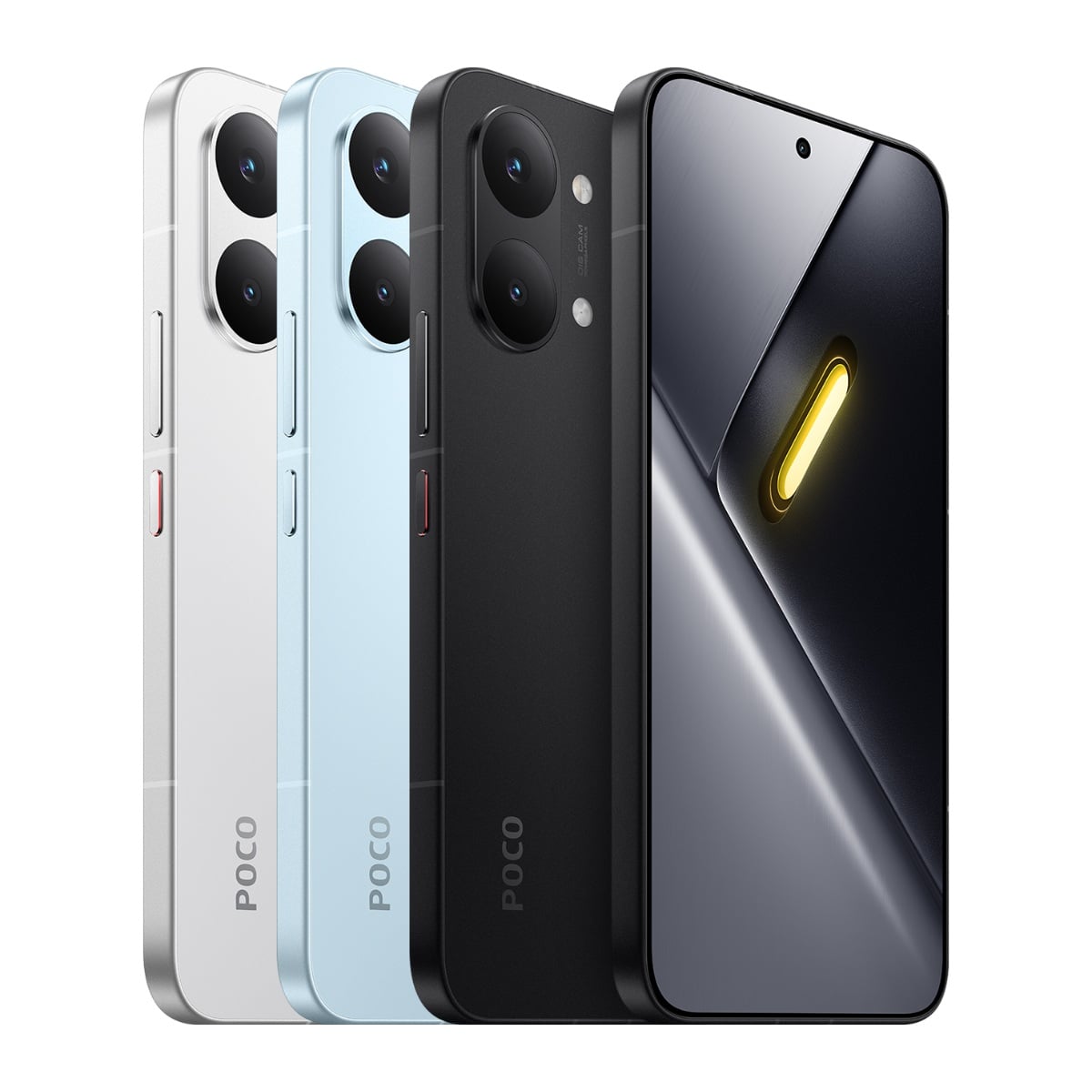
The Google Pixel 7 Pro and POCO X8 Pro Max sit in the same category and end up appealing to slightly different buyers. The POCO X8 Pro Max is the cheaper of the two at $469 versus $899, a difference of about $430. The spec table below ranks 10 of their differences, and they do not all point the same way: the Google Pixel 7 Pro wins on resolution (3120 x 1440 vs 2772 x 1280) and ultra-wide camera (12 MP, f/2.2, 125.8-degree vs 8 MP), the POCO X8 Pro Max on battery capacity (8500 mAh vs 5000 mAh) and charging (100W wired fast charging vs 23W wired (PD 3.0, 50% in 30 min)). The POCO X8 Pro Max is the newer of the two, released in 2026 against 2022. The pros lists below lead with — Google Pixel 7 Pro: A true 48MP 5x periscope telephoto, which very few phones at this price include at all; POCO X8 Pro Max: 8,500 mAh battery with 100W HyperCharge is among the largest in any phone at this price. Use the side-by-side spec table below to compare display, camera, processor and battery in detail and decide which one fits your priorities.
Who Should Buy
Buy the Google Pixel 7 Pro if…
- →A true 48MP 5x periscope telephoto, which very few phones at this price include at all
- →Google's computational photography — Magic Eraser, Photo Unblur and Night Sight — is still the reason to buy this phone
- →LTPO panel varies from 10Hz to 120Hz, so the high refresh rate costs less battery than it usually does
Buy the POCO X8 Pro Max if…
- →8,500 mAh battery with 100W HyperCharge is among the largest in any phone at this price
- →Dimensity 9500s on a 3 nm process with a Cortex-X925 prime core to 3.73 GHz
- →6.83-inch 2772 x 1280 AMOLED at 3,500 nits peak, with ultrasonic in-display fingerprint reading
Pros & Cons
Google Pixel 7 Pro
Pros
- A true 48MP 5x periscope telephoto, which very few phones at this price include at all
- Google's computational photography — Magic Eraser, Photo Unblur and Night Sight — is still the reason to buy this phone
- LTPO panel varies from 10Hz to 120Hz, so the high refresh rate costs less battery than it usually does
- Five years of OS and security updates to October 2027, after Google extended the Pixel 6 and 7 series from the original three — it runs Android 17 today
- 5000mAh battery with wireless charging, IP68 and Gorilla Glass Victus
Cons
- 23W wired charging is slow even by 2022 standards, and far behind what rivals were shipping
- Tensor G2 trails the Snapdragon 8 Gen 2 in raw CPU and GPU performance
- Runs warm under sustained gaming, which throttles long sessions
- 212 g and 8.9 mm thick — a genuinely large phone in the hand
- 23W wireless charging requires Google's second-generation Pixel Stand, not any Qi charger
POCO X8 Pro Max
Pros
- 8,500 mAh battery with 100W HyperCharge is among the largest in any phone at this price
- Dimensity 9500s on a 3 nm process with a Cortex-X925 prime core to 3.73 GHz
- 6.83-inch 2772 x 1280 AMOLED at 3,500 nits peak, with ultrasonic in-display fingerprint reading
- Wi-Fi 7 with Multi-Link Operation and Bluetooth 6.0 with LDAC, LHDC 5.0 and Auracast
Cons
- 218 g and 6.83 inches make it a genuinely large phone to hold
- The 8 MP ultra-wide is the weak link in an otherwise flagship-tier sheet
- POCO publishes no wireless charging — the 27W reverse charging is wired only
Full Specifications
| Spec | Google Pixel 7 Pro | POCO X8 Pro Max |
|---|---|---|
| Software | Android 13 at launch, currently Android 17 (OS and security updates to October 2027) | Xiaomi HyperOS 3 |
| Body | ||
| Weight | 212 g | 218 g |
| Material | Aluminum frame, Gorilla Glass Victus | Metal middle frame, Corning Gorilla Glass 7i |
| IP rating | IP68 | IP68 |
| Dimensions | 162.9 x 76.6 x 8.9 mm | 162.9 x 77.9 x 8.2 mm |
| Form factor | — | Bar |
| Camera | ||
| Main camera | 50 MP, f/1.85, OIS | 50 MP Light Fusion 600, f/1.5, OIS |
| Front camera | 10.8 MP, f/2.2 | 20 MP |
| Video | 4K@30/60fps, 1080p@up to 240fps | 4K@30/60fps, 1080p@30/60fps |
| Telephoto | 48 MP, f/3.5, 5x optical zoom, OIS | — |
| Ultrawide | 12 MP, f/2.2, 125.8-degree | 8 MP |
| Memory | ||
| RAM | 12 GB | 12 GB LPDDR5X |
| Storage options | 128 GB, 256 GB, 512 GB | 256 GB, 512 GB |
| Battery | ||
| Capacity | 5000 mAh | 8500 mAh |
| Charging | 23W wired (PD 3.0, 50% in 30 min) | 100W wired fast charging |
| Wireless charging | 23W (Pixel Stand 2nd gen) | — |
| Display | ||
| Size | 6.7 inches | 6.83 inches |
| Type | LTPO OLED | AMOLED |
| Resolution | 3120 x 1440 | 2772 x 1280 |
| Refresh rate | 10-120Hz (LTPO) | Up to 120Hz |
| Brightness (nits) | 1500 | 3500 |
| Processor | ||
| CPU | Octa-core (2x2.85 GHz Cortex-X1 & 2x2.35 GHz Cortex-A78 & 4x1.80 GHz Cortex-A55) | 1x Cortex-X925 up to 3.73GHz, 3x Cortex-X4 up to 3.3GHz, 4x Cortex-A720 up to 2.4GHz |
| GPU | Mali-G710 MP7 | Immortalis-G925 MC11 |
| Chipset | Google Tensor G2 | MediaTek Dimensity 9500s |
| Connectivity | ||
| 5G | ||
| NFC | ||
| USB | USB-C 3.2 | USB-C |
| Wi-Fi | Wi-Fi 6E | Wi-Fi 7 |
| Bluetooth | 5.2 | 6.0 |
Want to compare a third product?
Add another product for a 3-way comparison.
Related Comparisons
Explore more in phones, see all Google products or all Poco products. View full details for the Google Pixel 7 Pro or the POCO X8 Pro Max.