Garmin Forerunner 255 vs Garmin Venu 2
The Verdict
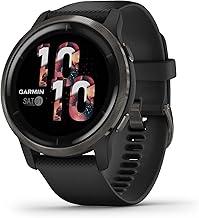
Both watches share Garmin's reliable ecosystem and health tracking, but diverge significantly in display technology and battery performance. Forerunner 255 features a MIP transflective screen delivering exceptional 14-day battery life and 30-hour GPS endurance, making it ideal for ultramarathoners and extended outdoor adventures. Venu 2 counters with a vibrant 416x416 AMOLED display offering superior color reproduction and visual clarity, though battery drops to 11 days standard and merely 8 hours with music playback. Connectivity specs are nearly identical, with Venu 2 gaining marginally newer Bluetooth 5.1. At $349 versus $399, the Forerunner 255 delivers exceptional value for endurance athletes prioritizing battery longevity and GPS performance. Choose Venu 2 if you prefer always-on AMOLED richness and don't mind frequent charging. For most runners and outdoor enthusiasts, Forerunner 255 represents the smarter investment.
Who Should Buy
Buy the Garmin Forerunner 255 if…
- →14-day battery life means weekly charging at most
- →Multi-band GPS for exceptional outdoor tracking accuracy
- →Morning Report with daily training readiness and HRV status
Buy the Garmin Venu 2 if…
- →Stunning AMOLED display with always-on option
- →11-day battery life outperforms most AMOLED smartwatches
- →Comprehensive fitness tracking with 25+ sport profiles
Category Scores
Pros & Cons
Garmin Forerunner 255
Pros
- 14-day battery life means weekly charging at most
- Multi-band GPS for exceptional outdoor tracking accuracy
- Morning Report with daily training readiness and HRV status
- Race Predictor estimates finish times for 5K to marathon
- Lightweight at 49 g and comfortable for 24/7 wear
Cons
- MIP display lacks the vibrancy of AMOLED competitors
- No touchscreen on base model — button-only navigation
- No ECG or blood pressure monitoring
- Limited smart features compared to Apple Watch or Wear OS
- Third-party app ecosystem is small
Garmin Venu 2
Pros
- Stunning AMOLED display with always-on option
- 11-day battery life outperforms most AMOLED smartwatches
- Comprehensive fitness tracking with 25+ sport profiles
- Health Snapshot for quick 2-minute wellness checks
- Garmin Pay for contactless payments via NFC
Cons
- No ECG or blood pressure monitoring
- No cellular option — requires phone for notifications
- Limited smart features compared to Apple Watch or Wear OS
- Third-party app ecosystem is limited
- $399 is expensive for a non-cellular watch
Full Specifications
| Spec | Garmin Forerunner 255 | Garmin Venu 2 |
|---|---|---|
| Software | Garmin proprietary OS | Garmin proprietary OS |
| Body | ||
| Weight | 49 g | 49 g |
| Case material | Fiber-reinforced polymer | Stainless steel bezel, fiber-reinforced polymer case |
| Water resistance | 5ATM | 5ATM |
| Health & Sensors | ||
| ECG | ||
| SpO₂ | ||
| Skin temperature | ||
| Heart rate | ||
| Sleep tracking | ||
| Battery | ||
| Battery life | Up to 14 days (smartwatch), 30 hrs GPS | Up to 11 days (smartwatch), 8 hrs GPS with music |
| Display | ||
| Size | 46mm | 45mm |
| Type | MIP (Memory-in-Pixel) transflective | AMOLED Always-On |
| Always-on display | ||
| Resolution | 260 x 260 | 416 x 416 |
| Processor | ||
| Chipset | Garmin custom SoC | Garmin custom SoC |
| Connectivity | ||
| GPS | ||
| NFC | ||
| Wi-Fi | ||
| Cellular | ||
| Bluetooth | 5.0 | 5.1 |
Related Comparisons
This comparison is based on verified manufacturer specifications covering display, performance, camera, battery, and build quality. Scores are generated by analyzing specs across weighted categories on a 10-point scale. Learn more about our methodology.
Explore more in smartwatches, see all Garmin products or all Garmin products. View full details for the Garmin Forerunner 255 or the Garmin Venu 2.