Fitbit Sense 2 vs Garmin Forerunner 965

The Verdict
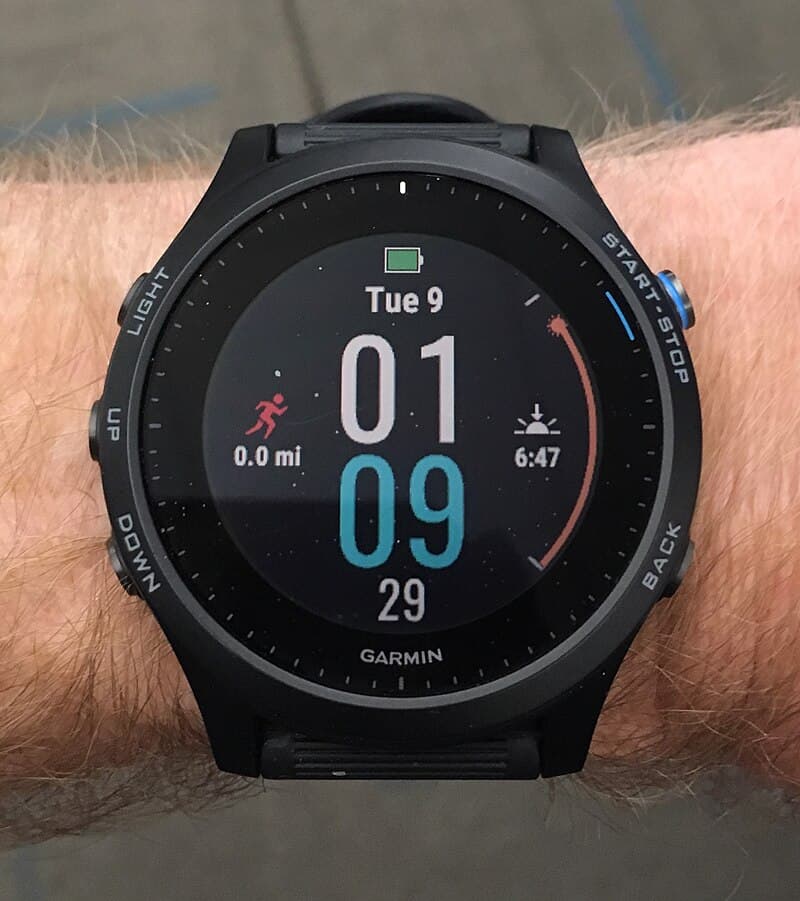
Fitbit Sense 2 delivers comprehensive health monitoring at an accessible price point, featuring ECG capability, blood oxygen tracking, and skin temperature sensors within a lightweight 37.6g aluminum frame. Garmin Forerunner 965 targets serious athletes with superior battery longevity (23 days vs 6 days), higher water resistance (10 ATM), WiFi connectivity, and a more robust titanium-reinforced build, though it omits ECG functionality. Display-wise, both feature AMOLED screens with always-on capability, though Garmin's 454x454 resolution edges Fitbit's 336x336 for clarity. Battery performance heavily favors Garmin,nearly four times longer smartwatch duration makes it ideal for multi-week adventures. For casual fitness enthusiasts prioritizing health insights and affordability, Fitbit Sense 2 excels; for endurance athletes needing extended tracking without charging, Forerunner 965 justifies its premium positioning. Fitbit wins on value and accessibility; Garmin wins on durability and battery endurance.
Who Should Buy
Buy the Fitbit Sense 2 if…
- →Continuous EDA sensor for all-day stress tracking
- →ECG and skin temperature tracking
- →Lightweight and comfortable for 24/7 wear
Buy the Garmin Forerunner 965 if…
- →23-day battery life in smartwatch mode for serious endurance athletes
- →First Forerunner with AMOLED display — bright and easy to read
- →Multi-band GPS with SatIQ for highly accurate outdoor tracking
Category Scores
Pros & Cons
Fitbit Sense 2
Pros
- Continuous EDA sensor for all-day stress tracking
- ECG and skin temperature tracking
- Lightweight and comfortable for 24/7 wear
- Up to 6 days of battery life
- Built-in GPS with Google Maps and Wallet support
Cons
- Removed third-party apps and music storage from original Sense
- No Wi-Fi connectivity
- Requires Fitbit Premium for advanced insights
- Limited smartwatch functionality compared to Wear OS
- Single physical button, no rotating crown
Garmin Forerunner 965
Pros
- 23-day battery life in smartwatch mode for serious endurance athletes
- First Forerunner with AMOLED display — bright and easy to read
- Multi-band GPS with SatIQ for highly accurate outdoor tracking
- Advanced running metrics: running power, VO2 max, race predictor
- Garmin Pay NFC and music storage for offline playback
Cons
- No ECG sensor
- No cellular connectivity
- Garmin OS app ecosystem is very limited compared to Wear OS or watchOS
- Expensive at $599 for a running-focused device
Full Specifications
| Spec | Fitbit Sense 2 | Garmin Forerunner 965 |
|---|---|---|
| Software | Fitbit OS | Garmin OS |
| Body | ||
| Weight | 37.6 g | 53 g |
| Case material | Aluminum case | Fiber-reinforced polymer with titanium bezel |
| Water resistance | 5 ATM | 10 ATM |
| Health & Sensors | ||
| ECG | ||
| SpO₂ | ||
| Skin temperature | ||
| Heart rate | ||
| Sleep tracking | ||
| Battery | ||
| Battery life | Up to 6 days, 12 hours with GPS | Up to 23 days smartwatch mode, 31 hrs GPS |
| Display | ||
| Size | 1.58 inch | 1.4 inch |
| Type | AMOLED | AMOLED |
| Always-on display | ||
| Resolution | 336 x 336 | 454 x 454 |
| Connectivity | ||
| GPS | ||
| NFC | ||
| Wi-Fi | ||
| Cellular | ||
| Bluetooth | 5.0 | 5.0 |
| Processor | ||
| Chipset | — | Garmin proprietary |
Related Comparisons
This comparison is based on verified manufacturer specifications covering display, performance, camera, battery, and build quality. Scores are generated by analyzing specs across weighted categories on a 10-point scale. Learn more about our methodology.
Explore more in smartwatches, see all Fitbit products or all Garmin products. View full details for the Fitbit Sense 2 or the Garmin Forerunner 965.