Dell Inspiron 15 (2024) vs Framework Laptop 13 (Intel)
The Verdict
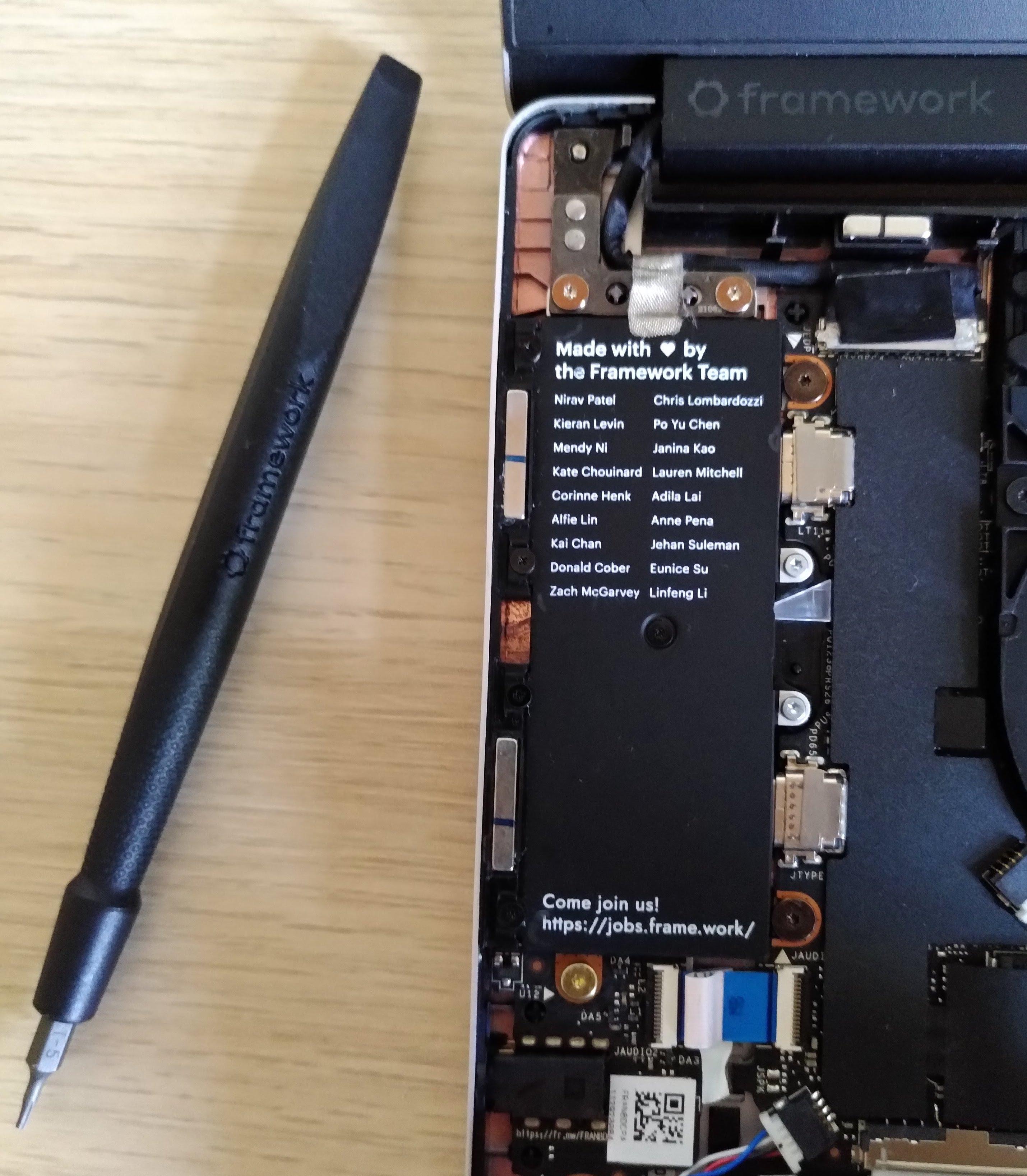
Dell Inspiron 15 targets budget-conscious buyers needing a practical 15.6-inch workhorse, while Framework Laptop 13 caters to professionals and enthusiasts willing to pay for premium engineering. Dell offers more screen real estate, a lighter weight option depending on configuration, and standard 8GB or 16GB DDR5 RAM with straightforward setup. Framework delivers superior specs across multiple dimensions: the 13.5-inch 2256x1504 display (400 nits vs 250) is sharper and brighter, the 12-core Intel i7-1360P significantly outperforms the i5-1335U or Ryzen 5 7530U, and Thunderbolt 3 ports provide twice the bandwidth of USB-C. Framework's modular expandable ports justify its premium pricing for power users. Battery life favors Dell slightly (12 hours vs 10), though both use 54-55Wh cells. Dell's plastic chassis feels less premium than Framework's recycled aluminum, but handles everyday wear adequately. At $599, Dell excels for students and casual users handling documents, browsing, and light editing. Framework's $1,049 price demands productivity gains: faster video rendering, seamless multitasking, and future-proof upgradeability justify the investment for content creators and developers. Storage and RAM are user-installable on Framework, reducing long-term costs, while Dell ships pre-configured. For budget buyers, Dell wins decisively. For those prioritizing performance and sustainability, Framework delivers measurably better hardware.
Who Should Buy
Buy the Dell Inspiron 15 (2024) if…
- →Solid all-rounder for everyday productivity and web browsing at $599
- →Good port selection including HDMI and SD card reader
- →Reasonable 54 Wh battery provides good endurance for the price
Buy the Framework Laptop 13 (Intel) if…
- →Fully modular — swap RAM, SSD, mainboard, ports, display, and battery
- →Swappable expansion card ports let you choose USB-C, USB-A, HDMI, or SD
- →Mainboard upgradeable to newer Intel or AMD generations
Category Scores
Pros & Cons
Dell Inspiron 15 (2024)
Pros
- Solid all-rounder for everyday productivity and web browsing at $599
- Good port selection including HDMI and SD card reader
- Reasonable 54 Wh battery provides good endurance for the price
- Lightweight at 1.65 kg for a 15.6-inch laptop
- Expandable storage via second M.2 slot
Cons
- 250-nit display brightness is dim for any non-indoor use
- 60Hz refresh rate feels behind modern standards
- 8 GB base RAM needs upgrading for comfortable multitasking
- Plastic chassis feels basic compared to aluminum competitors
- Webcam is only 720p — poor for video calls
Framework Laptop 13 (Intel)
Pros
- Fully modular — swap RAM, SSD, mainboard, ports, display, and battery
- Swappable expansion card ports let you choose USB-C, USB-A, HDMI, or SD
- Mainboard upgradeable to newer Intel or AMD generations
- Sustainable design with recycled aluminum and replaceable components
- 3:2 aspect ratio display is excellent for productivity
Cons
- DIY assembly required for lower-cost configurations
- 55 Wh battery provides modest life compared to ultrabook rivals
- Speakers are below average — thin and lacking bass
- No touchscreen option available
- Smaller brand means fewer service centers than Dell or HP
Full Specifications
| Spec | Dell Inspiron 15 (2024) | Framework Laptop 13 (Intel) |
|---|---|---|
| Software | Windows 11 Home | Windows 11 Home |
| Body | ||
| Weight | 1.65 kg | 2.87 lbs (1.3 kg) |
| Material | Plastic chassis with aluminum palm rest | Aluminum (50% post-consumer recycled) |
| Dimensions | 358.5 x 235.6 x 16.9 mm | 11.68 x 9.0 x 0.62 inches |
| Ports | ||
| HDMI | 1 | — |
| USB-A ports | 2 | 0 |
| USB-C ports | 1 | 2 |
| SD card | — | |
| Headphone Jack | — | |
| Thunderbolt ports | — | 2 |
| Battery | ||
| Battery life | Up to 12 hours | Up to 10 hours |
| Capacity | 54 Wh | 55 Wh |
| Display | ||
| Size | 15.6 inches | 13.5 inches |
| Type | IPS LCD | IPS |
| Resolution | 1920 x 1080 | 2256 x 1504 |
| Refresh rate | 60Hz | 60Hz |
| Brightness (nits) | 250 | 400 |
| Storage | ||
| SSD | 512 GB PCIe NVMe | 512 GB PCIe Gen 4 NVMe (user-installed) |
| Expandable storage | ||
| Keyboard | ||
| Backlit | ||
| Processor | ||
| RAM | 8 GB / 16 GB DDR5 | 16 GB DDR5 (user-installed) |
| Cores | 10-core (Intel) / 6-core (AMD) | 12 cores (4P + 8E) |
| Chipset | Intel Core i5-1335U / AMD Ryzen 5 7530U | Intel Core i7-1360P (13th Gen) |
Want to compare a third product?
Add another product for a 3-way comparison.
Related Comparisons
- Framework Laptop 13 (Intel) vs Valve Steam Deck OLED
- Framework Laptop 13 (Intel) vs Samsung Galaxy Book5 Pro
- Framework Laptop 13 (Intel) vs Samsung Galaxy Book4 Pro 360
- Framework Laptop 13 (Intel) vs Samsung Galaxy Book4 Pro
- Framework Laptop 13 (Intel) vs Samsung Galaxy Book4 360
- Framework Laptop 13 (Intel) vs Samsung Galaxy Book4 15"
This comparison is based on verified manufacturer specifications covering display, performance, camera, battery, and build quality. Scores are generated by analyzing specs across weighted categories on a 10-point scale. Learn more about our methodology.
Explore more in laptops, see all Dell products or all Framework products. View full details for the Dell Inspiron 15 (2024) or the Framework Laptop 13 (Intel).