ASUS VivoBook 15 (2023) vs Framework Laptop 16 (2024, Ryzen 7040)

The Verdict
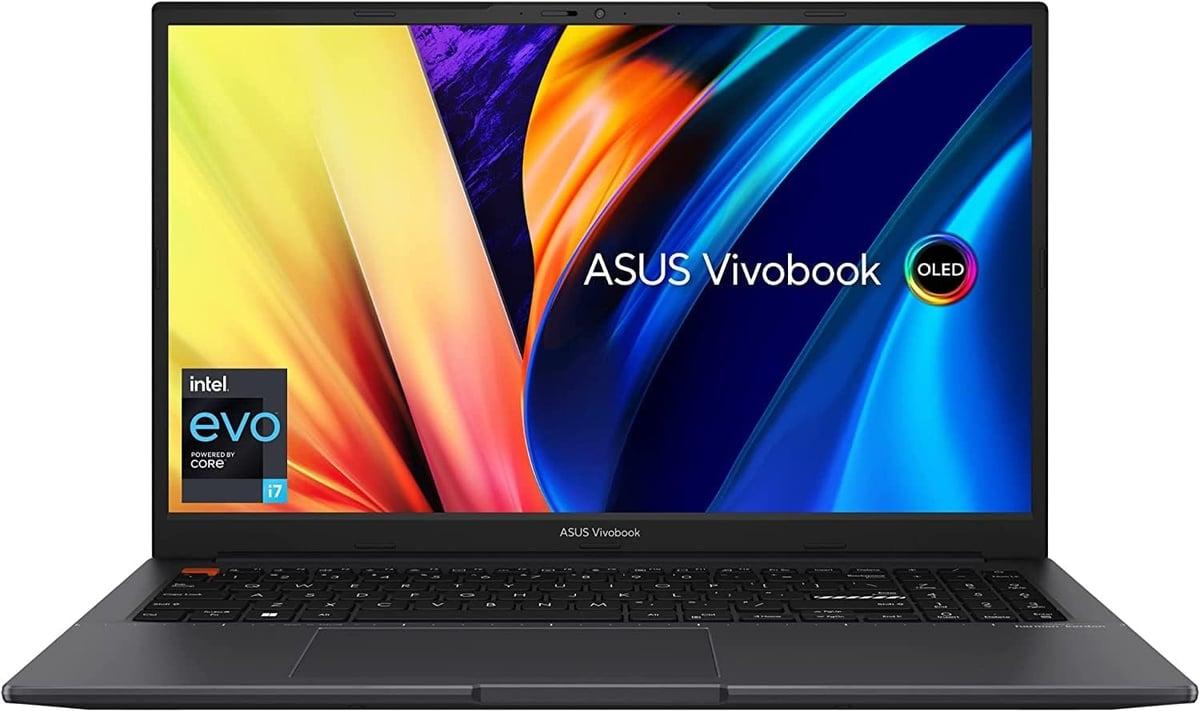
These laptops serve fundamentally different purposes and budgets. The ASUS VivoBook 15 targets everyday users needing portable productivity at an accessible price point. Its 15.6-inch 1920x1080 display, Intel Core i5-1335U with 8GB DDR4 RAM, and 512GB SSD handle email, browsing, and light work competently. Battery life reaches 8 hours, and the 1.7kg weight offers decent portability. However, the plastic chassis and 300-nit brightness limit longevity and outdoor usability. The Framework Laptop 16 occupies a premium tier entirely, built for creators and professionals. Its 16-inch 2560x1600 matte display at 500 nits provides superior clarity and outdoor visibility, while the 165Hz refresh rate aids video editing and gaming. The AMD Ryzen 7 7840HS with 16GB DDR5 RAM significantly outperforms the Intel chip for multitasking and demanding applications. Six USB-C ports with Thunderbolt support plus SD card reader offer professional connectivity. The 85Wh battery delivers 10 hours, and CNC aluminum construction ensures durability despite being heavier. For budget-conscious buyers needing basic computing, the VivoBook excels at value. Students or professionals requiring performance, expandability, and a better display should invest in the Framework. The price difference reflects genuine capability gaps rather than marketing.
Who Should Buy
Buy the ASUS VivoBook 15 (2023) if…
- →Affordable at $499 with a solid i5-1335U processor
- →512 GB SSD provides decent storage out of the box
- →Lightweight at 1.7 kg for a 15.6-inch laptop
Buy the Framework Laptop 16 (2024, Ryzen 7040) if…
- →Fully modular and user-repairable design
- →Configurable expansion card port system
- →Optional discrete Radeon RX 7700S GPU module
Category Scores
Pros & Cons
ASUS VivoBook 15 (2023)
Pros
- Affordable at $499 with a solid i5-1335U processor
- 512 GB SSD provides decent storage out of the box
- Lightweight at 1.7 kg for a 15.6-inch laptop
- ErgoLift hinge design improves typing ergonomics
- Expandable storage via M.2 slot
Cons
- 60Hz display feels outdated
- 42 Wh battery provides mediocre endurance
- 300-nit brightness is dim for outdoor or bright room use
- 8 GB soldered RAM is not upgradeable on some models
- Plastic build feels basic
Framework Laptop 16 (2024, Ryzen 7040)
Pros
- Fully modular and user-repairable design
- Configurable expansion card port system
- Optional discrete Radeon RX 7700S GPU module
- User-upgradeable RAM, SSD, keyboard, and bezel
- Strong Linux support and right-to-repair philosophy
Cons
- Expensive once GPU module is added
- Heavier and thicker than mainstream 16-inch laptops
- Battery life modest with discrete GPU
- No Thunderbolt certification (USB4 only)
- Speakers are underwhelming
Full Specifications
| Spec | ASUS VivoBook 15 (2023) | Framework Laptop 16 (2024, Ryzen 7040) |
|---|---|---|
| Software | Windows 11 Home | Windows 11 Home or Linux |
| Body | ||
| Weight | 1.7 kg | 2.1 kg |
| Material | Plastic chassis with metal lid | CNC aluminum |
| Dimensions | 359.7 x 232.5 x 17.9 mm | 356.58 x 270.41 x 20.95 mm |
| Ports | ||
| HDMI | 1 | 1 |
| USB-A ports | 2 | 2 |
| USB-C ports | 1 | 6 |
| Headphone Jack | — | |
| SD card | — | |
| Thunderbolt ports | — | 0 |
| Battery | ||
| Battery life | Up to 8 hours | Up to 10 hours |
| Capacity | 42 Wh | 85 Wh |
| Display | ||
| Size | 15.6 inches | 16 inches |
| Type | IPS LCD | Matte IPS, 16:10 |
| Resolution | 1920 x 1080 | 2560 x 1600 |
| Refresh rate | 60Hz | 165Hz |
| Brightness (nits) | 300 | 500 |
| Storage | ||
| SSD | 512 GB PCIe NVMe | 512 GB PCIe 4.0 NVMe (up to 8 TB) |
| Expandable storage | ||
| Keyboard | ||
| Backlit | ||
| Processor | ||
| RAM | 8 GB DDR4 | 16 GB DDR5-5600 (up to 64 GB) |
| Cores | 10-core (2P + 8E) | 8 cores / 16 threads |
| Chipset | 13th Gen Intel Core i5-1335U | AMD Ryzen 7 7840HS |
Want to compare a third product?
Add another product for a 3-way comparison.
Related Comparisons
- Framework Laptop 16 (2024, Ryzen 7040) vs Samsung Galaxy Book5 Pro
- Framework Laptop 16 (2024, Ryzen 7040) vs Samsung Galaxy Book4 Ultra
- Framework Laptop 16 (2024, Ryzen 7040) vs Samsung Galaxy Book4 Pro 360
- Framework Laptop 16 (2024, Ryzen 7040) vs Samsung Galaxy Book4 Pro
- Framework Laptop 16 (2024, Ryzen 7040) vs Samsung Galaxy Book4 360
- Framework Laptop 16 (2024, Ryzen 7040) vs Samsung Galaxy Book4 15"
This comparison is based on verified manufacturer specifications covering display, performance, camera, battery, and build quality. Scores are generated by analyzing specs across weighted categories on a 10-point scale. Learn more about our methodology.
Explore more in laptops, see all ASUS products or all Framework products. View full details for the ASUS VivoBook 15 (2023) or the Framework Laptop 16 (2024, Ryzen 7040).