Apple iPhone 8 vs INFOBAR ZERO

How They Compare
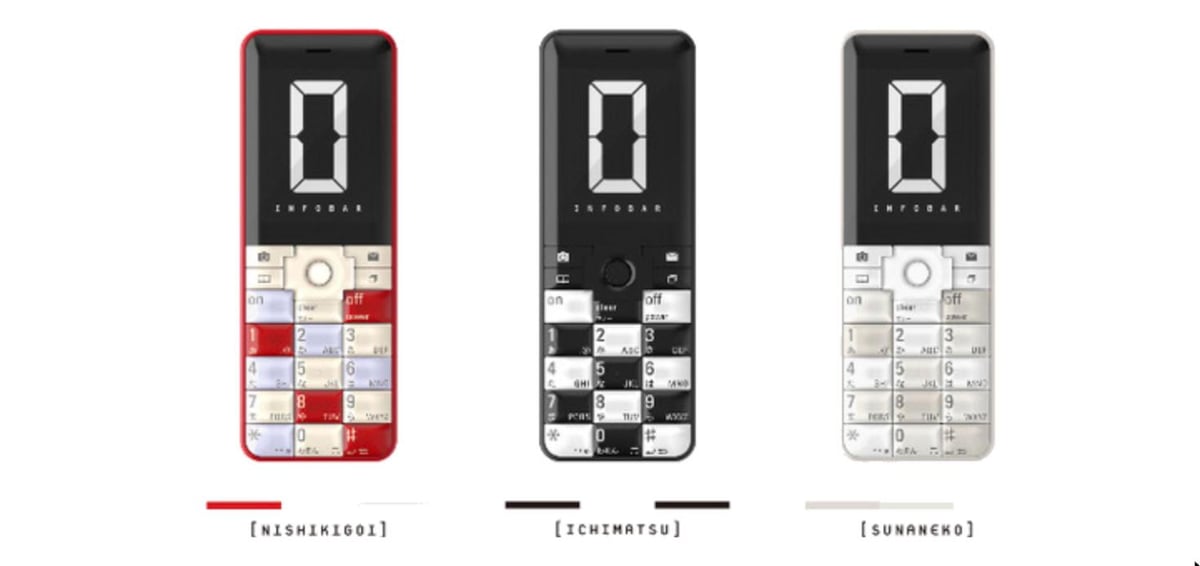
The Apple iPhone 8 and INFOBAR ZERO sit in the same category and end up appealing to slightly different buyers. The INFOBAR ZERO is the cheaper of the two at $219 versus $699, a difference of about $480. The spec table below ranks 8 of their differences, and they do not all point the same way: the Apple iPhone 8 wins on screen size (4.7 inches vs 2.4 inches) and resolution (1334 x 750 vs 480 x 640 pixels (VGA)), the INFOBAR ZERO on battery capacity (2,055 mAh vs 1821 mAh) and weight (128 g vs 148 g). The INFOBAR ZERO is the newer of the two, released in 2026 against 2017. The pros lists below lead with — Apple iPhone 8: Compact and lightweight at 148 g; INFOBAR ZERO: Iconic Naoto Fukasawa INFOBAR design in three colours. Use the side-by-side spec table below to compare display, camera, processor and battery in detail and decide which one fits your priorities.
Who Should Buy
Buy the Apple iPhone 8 if…
- →Compact and lightweight at 148 g
- →Wireless charging support
- →Powerful A11 Bionic chip
Buy the INFOBAR ZERO if…
- →Iconic Naoto Fukasawa INFOBAR design in three colours
- →Long standby from the 2,055 mAh battery
- →USB-C charging, Bluetooth and Wi-Fi on a distraction-free phone
Pros & Cons
Apple iPhone 8
Pros
- Compact and lightweight at 148 g
- Wireless charging support
- Powerful A11 Bionic chip
- True Tone display
- Reliable Touch ID fingerprint sensor
Cons
- Very small 1821 mAh battery
- Dated home button design with large bezels
- Single rear camera only
- 750p resolution on 4.7-inch display
- Only 2 GB RAM
INFOBAR ZERO
Pros
- Iconic Naoto Fukasawa INFOBAR design in three colours
- Long standby from the 2,055 mAh battery
- USB-C charging, Bluetooth and Wi-Fi on a distraction-free phone
- Sold SIM-free and works with au, povo2.0 and second-number plans
Cons
- No web browser or apps by design
- No water or dust resistance
- 2 MP camera and small 2.4-inch screen
- Expensive for a feature phone
Full Specifications
| Spec | Apple iPhone 8 | INFOBAR ZERO |
|---|---|---|
| Software | iOS 11 | Proprietary feature phone software (no apps, no web browser) |
| Body | ||
| Weight | 148 g | 128 g |
| Material | Aluminum frame, glass back | — |
| IP rating | IP67 | — |
| Dimensions | 138.4 x 67.3 x 7.3 mm | 138 x 50 x 13.0 mm |
| Colors | — | NISHIKIGOI, ICHIMATSU, SUNANEKO |
| Designer | — | Naoto Fukasawa (au Design project) |
| Form factor | — | Candybar feature phone |
| Water resistance | — | Not water or dust resistant |
| Camera | ||
| Main camera | 12 MP, f/1.8, OIS | 2 MP |
| Front camera | 7 MP, f/2.2 | — |
| Video | 4K@60fps | — |
| Memory | ||
| RAM | 2 GB | 1 GB |
| Storage options | 64 GB, 256 GB | 8 GB |
| Battery | ||
| Capacity | 1821 mAh | 2,055 mAh |
| Charging | Up to 50% in 30 minutes with 18W adapter or higher | USB-C |
| Wireless charging | 7.5W Qi | — |
| Standby | — | About 240 hours (4G LTE) |
| Talk Time | — | About 360 minutes (VoLTE) |
| Display | ||
| Size | 4.7 inches | 2.4 inches |
| Type | Retina IPS LCD | TFT |
| Resolution | 1334 x 750 | 480 x 640 pixels (VGA) |
| Refresh rate | 60Hz | — |
| Brightness (nits) | 625 | — |
| Processor | ||
| CPU | Hexa-core (2x2.39 GHz + 4x1.7 GHz) | — |
| GPU | Apple GPU (3-core) | — |
| Chipset | Apple A11 Bionic | MediaTek MT8765WA |
| Connectivity | ||
| 5G | Not stated | |
| NFC | No (no FeliCa) | |
| USB | Lightning | USB-C |
| Wi-Fi | Wi-Fi 5 (802.11ac) | Wi-Fi 4 (802.11 b/g/n, 2.4 GHz) |
| Bluetooth | 5.0 | 4.2 |
| Network | — | 4G LTE (calls, SMS); no 5G |
| Features | — | Calls, SMS, camera, contacts, calendar, alarm, music player, calculator |
Want to compare a third product?
Add another product for a 3-way comparison.
Related Comparisons
Explore more in phones, see all Apple products or all KDDI products. View full details for the Apple iPhone 8 or the INFOBAR ZERO.