Apple iPhone Air vs Nothing Phone (4b)

How They Compare
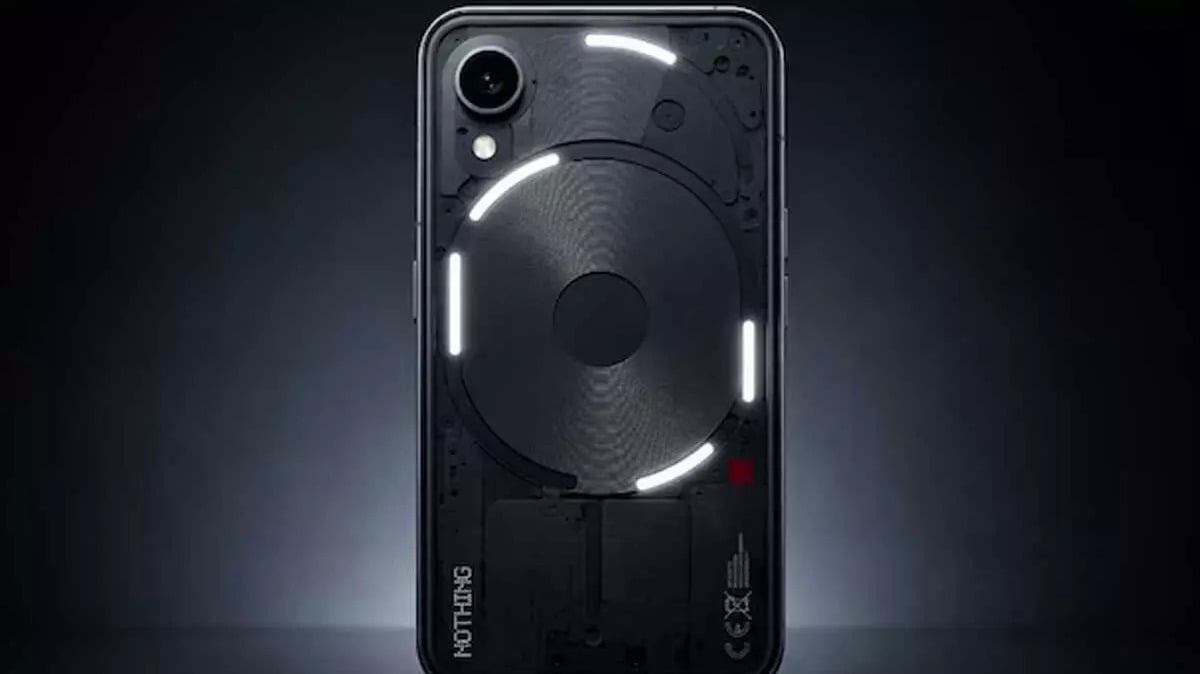
The Apple iPhone Air and Nothing Phone (4b) sit in the same category and end up appealing to slightly different buyers. The Nothing Phone (4b) is the cheaper of the two at $509 versus $999, a difference of about $490. The spec table below ranks 10 of their differences, and they do not all point the same way: the Apple iPhone Air wins on wireless charging (20W MagSafe / Qi2 vs No) and resolution (1260 x 2736 (460 ppi) vs 1080 x 2344), the Nothing Phone (4b) on battery capacity (5,200 mAh vs 3149 mAh) and screen size (6.77 inches vs 6.5 inches). The Nothing Phone (4b) is the newer of the two, released in 2026 against 2025. The pros lists below lead with — Apple iPhone Air: 5.64mm and 165g — the thinnest iPhone Apple has made, and the weight difference against a Pro Max is immediately obvious in hand; Nothing Phone (4b): Glyph Interface brings unique LED notification system not found on competing mid-rangers. Use the side-by-side spec table below to compare display, camera, processor and battery in detail and decide which one fits your priorities.
Who Should Buy
Buy the Apple iPhone Air if…
- →5.64mm and 165g — the thinnest iPhone Apple has made, and the weight difference against a Pro Max is immediately obvious in hand
- →A19 Pro with a 16-core Neural Engine, the same silicon family as the Pro models rather than a cut-down chip
- →3,000 nits peak outdoor brightness on a 460 ppi panel that scales down to 1Hz
Buy the Nothing Phone (4b) if…
- →Glyph Interface brings unique LED notification system not found on competing mid-rangers
- →Nothing OS 3.1 offers a clean, near-stock Android experience with minimal bloatware
- →Snapdragon 7s Gen 3 delivers solid everyday performance for the expected price bracket
Pros & Cons
Apple iPhone Air
Pros
- 5.64mm and 165g — the thinnest iPhone Apple has made, and the weight difference against a Pro Max is immediately obvious in hand
- A19 Pro with a 16-core Neural Engine, the same silicon family as the Pro models rather than a cut-down chip
- 3,000 nits peak outdoor brightness on a 460 ppi panel that scales down to 1Hz
- Ceramic Shield 2 on front and back, on a titanium frame, with IP68 good to 6 m
- $999 for Pro-tier silicon, which is $200 under the 17 Pro Max
Cons
- One rear lens. The 52mm "2x telephoto" is a crop of the 48MP sensor, and there is no ultrawide at all
- USB-C transfers at 480 Mb/s — USB 2.0 speed — so moving 1TB of footage off the phone means going wireless
- A single mono speaker, where every other iPhone 17 has a stereo pair
- eSIM only worldwide, with no SIM tray in any market, which makes swapping carriers abroad a provisioning problem rather than a physical one
- 3,149 mAh is small in absolute terms, and the 27-hour figure depends on a panel that spends most of its time at low refresh
Nothing Phone (4b)
Pros
- Glyph Interface brings unique LED notification system not found on competing mid-rangers
- Nothing OS 3.1 offers a clean, near-stock Android experience with minimal bloatware
- Snapdragon 7s Gen 3 delivers solid everyday performance for the expected price bracket
Cons
- No wireless charging support at this price tier is a notable omission compared to some rivals
- USB-C 2.0 port limits data transfer speeds and feels outdated in a 2026 release
Full Specifications
| Spec | Apple iPhone Air | Nothing Phone (4b) |
|---|---|---|
| Software | iOS 26 (upgradable to iOS 27) | Nothing OS 4.1 based on Android 16 |
| Body | ||
| Colors | Space Black, Cloud White, Light Gold, Sky Blue | Black, White |
| Weight | 165 g | 210 g |
| Material | Titanium frame, Ceramic Shield 2 front and back | Plastic back, aluminum frame |
| IP rating | IP68 (6 m for 30 min) | — |
| Dimensions | 156.2 x 74.7 x 5.64 mm | 164.4 x 78.2 x 8.6 mm |
| Glyph Interface | — | Yes |
| Camera | ||
| Main camera | 48 MP, f/1.6, 26mm, sensor-shift OIS | 50MP f/1.8 |
| Front camera | 18 MP, f/1.9, Center Stage, autofocus | 16MP |
| Video | 4K Dolby Vision @ 24/25/30/60fps, 1080p slo-mo @ 120/240fps | 4K@30fps |
| Telephoto | 12 MP, f/1.6, 52mm — a 2x crop of the 48MP main sensor, not a separate lens | — |
| Ultrawide | — | 8MP |
| Memory | ||
| RAM | 12 GB LPDDR5X | 8GB |
| Storage options | 256 GB, 512 GB, 1 TB | 128GB, 256GB |
| Expandable storage | — | No |
| Battery | ||
| Capacity | 3149 mAh | 5,200 mAh |
| Charging | Up to 50% in 30 minutes with 20W adapter or higher | 33W wired |
| Wireless charging | 20W MagSafe / Qi2 | No |
| Display | ||
| Size | 6.5 inches | 6.77 inches |
| Type | LTPO Super Retina XDR OLED, ProMotion | AMOLED |
| Resolution | 1260 x 2736 (460 ppi) | 1080 x 2344 |
| Refresh rate | 1-120Hz adaptive | 120Hz |
| Brightness (nits) | 1000 typical / 1600 HDR / 3000 peak | — |
| Processor | ||
| CPU | 6-core (2 performance + 4 efficiency) | Octa-core |
| GPU | Apple GPU (5-core) with Neural Accelerators | Adreno 810 |
| Chipset | Apple A19 Pro, Apple C1X modem | Qualcomm Snapdragon 6 Gen 4 |
| Connectivity | ||
| 5G | Yes | |
| NFC | ||
| SIM | Dual eSIM only — no physical SIM tray in any market | — |
| USB | USB-C 2.0 | USB-C 2.0 |
| Wi-Fi | Wi-Fi 7 (802.11be) | Wi-Fi 6 |
| Bluetooth | 6.0 | 6.0 |
Want to compare a third product?
Add another product for a 3-way comparison.
Related Comparisons
Explore more in phones, see all Apple products or all Nothing products. View full details for the Apple iPhone Air or the Nothing Phone (4b).