Apple iPhone Air vs Google Pixel 8a

The Verdict
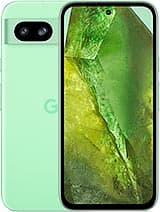
Apple's iPhone Air commands a $500 premium over Google's Pixel 8a, reflecting their fundamentally different philosophies. The iPhone Air delivers superior display technology with its 6.5-inch LTPO Super Retina XDR reaching 3000 nits peak brightness and 1-120Hz adaptive refresh, compared to the Pixel 8a's smaller 6.1-inch Actua OLED capped at 2000 nits. Performance heavily favors Apple's A19 Pro with its optimized 6-core architecture and 5-core GPU, while the Pixel 8a relies on Google's Tensor G3, which lags in raw computational speed despite excelling at machine learning tasks. Camera capabilities show interesting trade-offs: the iPhone Air offers a 48MP main sensor with superior 2x telephoto via sensor crop and center stage autofocus on the front camera, while the Pixel 8a provides practical versatility with its dual camera setup and proven computational photography strength. Battery capacity tips toward the Pixel 8a at 4492 mAh versus 3149 mAh, though Apple claims 27 hours video playback. The iPhone Air features premium build quality with titanium and ceramic shield, IP68 water resistance to 6 meters, and faster 20W MagSafe charging. The Pixel 8a delivers remarkable value at half the price with acceptable performance for everyday tasks, solid build quality, and a larger battery for heavy users. Choose the iPhone Air if you want flagship performance, superior display quality, and premium materials; pick the Pixel 8a if budget and battery life matter most.
Who Should Buy
Buy the Apple iPhone Air if…
- →5.64mm and 165g — the thinnest iPhone Apple has made, and the weight difference against a Pro Max is immediately obvious in hand
- →A19 Pro with a 16-core Neural Engine, the same silicon family as the Pro models rather than a cut-down chip
- →3,000 nits peak outdoor brightness on a 460 ppi panel that scales down to 1Hz
Buy the Google Pixel 8a if…
- →Flagship-grade Tensor G3 chip at mid-range price
- →Seven years of software updates (rare at this price)
- →Excellent main camera for the class
Category Scores
Pros & Cons
Apple iPhone Air
Pros
- 5.64mm and 165g — the thinnest iPhone Apple has made, and the weight difference against a Pro Max is immediately obvious in hand
- A19 Pro with a 16-core Neural Engine, the same silicon family as the Pro models rather than a cut-down chip
- 3,000 nits peak outdoor brightness on a 460 ppi panel that scales down to 1Hz
- Ceramic Shield 2 on front and back, on a titanium frame, with IP68 good to 6 m
- $999 for Pro-tier silicon, which is $200 under the 17 Pro Max
Cons
- One rear lens. The 52mm "2x telephoto" is a crop of the 48MP sensor, and there is no ultrawide at all
- USB-C transfers at 480 Mb/s — USB 2.0 speed — so moving 1TB of footage off the phone means going wireless
- A single mono speaker, where every other iPhone 17 has a stereo pair
- eSIM only worldwide, with no SIM tray in any market, which makes swapping carriers abroad a provisioning problem rather than a physical one
- 3,149 mAh is small in absolute terms, and the 27-hour figure depends on a panel that spends most of its time at low refresh
Google Pixel 8a
Pros
- Flagship-grade Tensor G3 chip at mid-range price
- Seven years of software updates (rare at this price)
- Excellent main camera for the class
- Bright 120Hz OLED display
- Wireless charging support
Cons
- Slow 18W wired charging
- Smaller battery than competitors
- Plastic back instead of glass
- No telephoto camera
- Bezels are thicker than the flagship Pixels
Full Specifications
| Spec | Apple iPhone Air | Google Pixel 8a |
|---|---|---|
| Software | iOS 26 (upgradable to iOS 27) | Android 14 |
| Body | ||
| Colors | Space Black, Cloud White, Light Gold, Sky Blue | — |
| Weight | 165 g | 189 g |
| Material | Titanium frame, Ceramic Shield 2 front and back | Aluminum frame, Gorilla Glass 3 |
| IP rating | IP68 (6 m for 30 min) | IP67 |
| Dimensions | 156.2 x 74.7 x 5.64 mm | 152.1 x 72.7 x 8.9 mm |
| Camera | ||
| Main camera | 48 MP, f/1.6, 26mm, sensor-shift OIS | 64 MP, f/1.89, OIS |
| Front camera | 18 MP, f/1.9, Center Stage, autofocus | 13 MP, f/2.2 |
| Video | 4K Dolby Vision @ 24/25/30/60fps, 1080p slo-mo @ 120/240fps | 4K@60fps |
| Telephoto | 12 MP, f/1.6, 52mm — a 2x crop of the 48MP main sensor, not a separate lens | — |
| Ultrawide | — | 13 MP, f/2.2, 120-degree |
| Memory | ||
| RAM | 12 GB LPDDR5X | 8 GB |
| Storage options | 256 GB, 512 GB, 1 TB | 128 GB, 256 GB |
| Battery | ||
| Capacity | 3149 mAh | 4492 mAh |
| Charging | Up to 50% in 30 minutes with 20W adapter or higher | 18W wired |
| Wireless charging | 20W MagSafe / Qi2 | 7.5W (Qi) |
| Display | ||
| Size | 6.5 inches | 6.1 inches |
| Type | LTPO Super Retina XDR OLED, ProMotion | Actua OLED |
| Resolution | 1260 x 2736 (460 ppi) | 2400 x 1080 |
| Refresh rate | 1-120Hz adaptive | 120Hz |
| Brightness (nits) | 1000 typical / 1600 HDR / 3000 peak | 2000 |
| Processor | ||
| CPU | 6-core (2 performance + 4 efficiency) | Nona-core (1x3.0 GHz Cortex-X3 & 4x2.45 GHz Cortex-A715 & 4x2.15 GHz Cortex-A510) |
| GPU | Apple GPU (5-core) with Neural Accelerators | Immortalis-G715s MC10 |
| Chipset | Apple A19 Pro, Apple C1X modem | Google Tensor G3 |
| Connectivity | ||
| 5G | ||
| NFC | ||
| SIM | Dual eSIM only — no physical SIM tray in any market | — |
| USB | USB-C 2.0 | USB-C 3.0 |
| Wi-Fi | Wi-Fi 7 (802.11be) | Wi-Fi 6E |
| Bluetooth | 6.0 | 5.3 |
Want to compare a third product?
Add another product for a 3-way comparison.
Related Comparisons
Explore more in phones, see all Apple products or all Google products. View full details for the Apple iPhone Air or the Google Pixel 8a.