Apple iPhone 14 Plus vs ASUS Zenfone 10

The Verdict
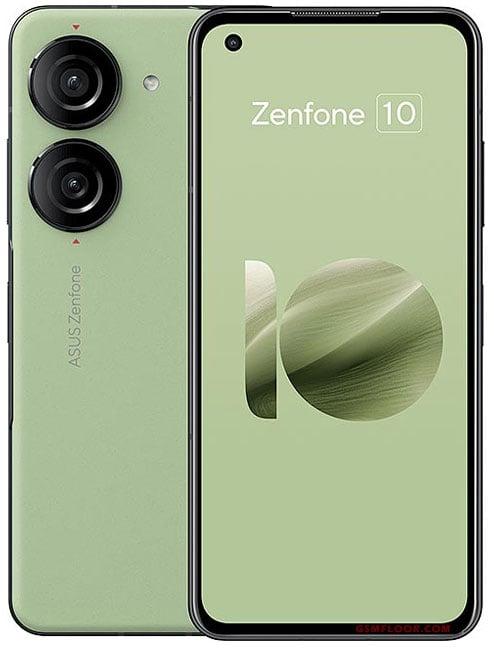
Apple's iPhone 14 Plus targets users prioritizing screen real estate with its expansive 6.7-inch display, while ASUS positions the Zenfone 10 as a compact powerhouse at 5.92 inches. The Zenfone 10 dominates raw specifications: its Snapdragon 8 Gen 2 processor outperforms the A15 Bionic, the 144Hz refresh rate demolishes the iPhone's 60Hz panel, and the 50MP main camera with gimbal OIS surpasses Apple's 12MP sensor. It also charges faster at 30W versus 20W and includes 8GB RAM standard. However, Apple maintains advantages in video capabilities with Cinematic mode and Action mode, computational photography refinement, and consistent software support longevity. The iPhone 14 Plus excels in low-light photography due to its larger f/1.5 aperture and sensor-shift stabilization. Build quality differs notably: Apple uses premium Ceramic Shield while ASUS relies on plastic backing despite Gorilla Glass Victus 2 front protection. At $899 versus $699, the iPhone commands a significant price premium for ecosystem integration and brand cachet rather than raw performance metrics. The Zenfone 10 offers substantially better value and technical specifications, making it the superior choice for performance-focused buyers seeking compact phones with latest silicon. iPhone 14 Plus suits those valuing size, ecosystem integration, and Apple's proven software maturity over cutting-edge hardware specs.
Who Should Buy
Buy the Apple iPhone 14 Plus if…
- →Largest iPhone screen at 6.7 inches at a lower price than Pro Max
- →Excellent all-day battery life thanks to large 4325 mAh battery
- →Crash Detection and Emergency SOS via satellite safety features
Buy the ASUS Zenfone 10 if…
- →Compact 5.92-inch flagship — one of the few small high-end phones
- →Snapdragon 8 Gen 2 delivers flagship-tier performance
- →6-axis gimbal stabilization for ultra-steady video and photos
Category Scores
Pros & Cons
Apple iPhone 14 Plus
Pros
- Largest iPhone screen at 6.7 inches at a lower price than Pro Max
- Excellent all-day battery life thanks to large 4325 mAh battery
- Crash Detection and Emergency SOS via satellite safety features
- Photonic Engine improves low-light photography
- MagSafe ecosystem for accessories and wireless charging
Cons
- 60Hz display feels outdated compared to ProMotion models
- Lightning port instead of USB-C
- No telephoto camera — only dual lens system
- Notch instead of Dynamic Island
- 12 MP camera resolution unchanged from previous generations
ASUS Zenfone 10
Pros
- Compact 5.92-inch flagship — one of the few small high-end phones
- Snapdragon 8 Gen 2 delivers flagship-tier performance
- 6-axis gimbal stabilization for ultra-steady video and photos
- 144Hz AMOLED display is smooth and vibrant
- IP68 water resistance with wireless charging
Cons
- 30W wired charging is slow compared to 100W+ competitors
- 5.92-inch screen limits content consumption and typing comfort
- No telephoto lens — digital zoom only
- Plastic back feels less premium than glass
- ASUS software update cadence is slower than Samsung or Google
Full Specifications
| Spec | Apple iPhone 14 Plus | ASUS Zenfone 10 |
|---|---|---|
| Software | iOS 16 | Android 13 (ZenUI) |
| Body | ||
| Weight | 203 g | 172 g |
| Material | Aluminum frame, Ceramic Shield front | Aluminum frame, Gorilla Glass Victus 2 front, plastic back |
| IP rating | IP68 | IP68 |
| Dimensions | 160.8 x 78.1 x 7.80 mm | 146.5 x 68.1 x 9.4 mm |
| Camera | ||
| Main camera | 12 MP, f/1.5, sensor-shift OIS | 50 MP, f/1.9, Gimbal OIS, Sony IMX766 |
| Front camera | 12 MP TrueDepth, f/1.9, autofocus | 32 MP, f/2.4 |
| Video | 4K@60fps, Cinematic mode, Action mode | 8K@24fps, 4K@60fps |
| Ultrawide | 12 MP, f/2.4 | 13 MP, f/2.2 |
| Memory | ||
| RAM | 6 GB | 8 GB / 16 GB |
| Storage options | 128 GB, 256 GB, 512 GB | 128 GB, 256 GB, 512 GB |
| Battery | ||
| Capacity | 4325 mAh | 4300 mAh |
| Charging | 20W wired | 30W wired |
| Wireless charging | 15W MagSafe, 7.5W Qi | 15W Qi |
| Display | ||
| Size | 6.7 inches | 5.92 inches |
| Type | Super Retina XDR OLED | AMOLED |
| Resolution | 2778 x 1284 | 2400 x 1080 |
| Refresh rate | 60Hz | 144Hz |
| Brightness (nits) | 1200 | 1100 |
| Processor | ||
| CPU | Hexa-core (2x3.23 GHz + 4x1.82 GHz) | Octa-core (1x3.2 GHz + 2x2.8 GHz + 2x2.8 GHz + 3x2.0 GHz) |
| GPU | Apple GPU (5-core) | Adreno 740 |
| Chipset | Apple A15 Bionic | Qualcomm Snapdragon 8 Gen 2 |
| Connectivity | ||
| 5G | ||
| NFC | ||
| USB | Lightning | USB-C 3.1 |
| Wi-Fi | Wi-Fi 6 | Wi-Fi 7 |
| Bluetooth | 5.3 | 5.3 |
Want to compare a third product?
Add another product for a 3-way comparison.
Related Comparisons
This comparison is based on verified manufacturer specifications covering display, performance, camera, battery, and build quality. Scores are generated by analyzing specs across weighted categories on a 10-point scale. Learn more about our methodology.
Explore more in phones, see all Apple products or all ASUS products. View full details for the Apple iPhone 14 Plus or the ASUS Zenfone 10.