Apple iPhone 11 Pro vs Google Pixel 4
The Verdict
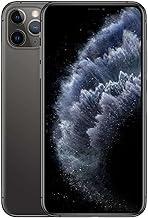
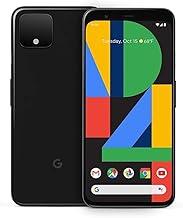
Both flagship phones deliver exceptional experiences but excel in different areas. Apple's iPhone 11 Pro features a stunning 1200-nit Super Retina XDR OLED display with superior brightness, the powerful A13 Bionic processor, and a versatile triple-camera system with 4K@60fps video recording. Google's Pixel 4 counters with a 90Hz refresh-rate display for smoother scrolling, lighter 162g build, stronger 6GB RAM, and computational photography prowess that often outperforms raw megapixel counts. Battery life slightly favors the iPhone due to larger 3046mAh capacity versus Pixel 4's 2800mAh. The Pixel 4's $200 price advantage and superior wireless charging (11W vs 7.5W) add value. For video creators and demanding users, the iPhone 11 Pro justifies its premium; for photography enthusiasts seeking computational power and a lighter device, the Pixel 4 remains compelling at $799.
Who Should Buy
Buy the Apple iPhone 11 Pro if…
- →Triple camera system with Night mode
- →Compact 5.8-inch OLED with great color accuracy
- →18W fast charger included in the box
Buy the Google Pixel 4 if…
- →Best-in-class astrophotography mode
- →90Hz smooth OLED display
- →Excellent dual camera with telephoto
Category Scores
Pros & Cons
Apple iPhone 11 Pro
Pros
- Triple camera system with Night mode
- Compact 5.8-inch OLED with great color accuracy
- 18W fast charger included in the box
- A13 Bionic was the fastest mobile chip in 2019
- Premium matte glass finish
Cons
- No 5G support
- 60Hz display refresh rate
- Smaller battery than Pro Max
- Wide notch design
- Starting at $999 for 64 GB was steep
Google Pixel 4
Pros
- Best-in-class astrophotography mode
- 90Hz smooth OLED display
- Excellent dual camera with telephoto
- Face unlock with 3D face scanning
- Compact and lightweight
Cons
- Terrible 2800 mAh battery life
- No ultrawide camera
- Large forehead bezel
- No fingerprint scanner
- Only 64 GB base storage
Full Specifications
| Spec | Apple iPhone 11 Pro | Google Pixel 4 |
|---|---|---|
| Software | iOS 13 | Android 10 |
| Body | ||
| Weight | 188 g | 162 g |
| Material | Stainless steel frame, textured matte glass | Aluminum frame, Gorilla Glass 5 |
| IP rating | IP68 | IP68 |
| Dimensions | 144 x 71.4 x 8.1 mm | 147.1 x 68.8 x 8.2 mm |
| Camera | ||
| Main camera | 12 MP, f/1.8, OIS | 12.2 MP, f/1.7, OIS |
| Front camera | 12 MP TrueDepth, f/2.2 | 8 MP, f/2.0 |
| Video | 4K@60fps | 4K@30fps |
| Telephoto | 12 MP, f/2.0, 2x optical zoom | 16 MP, f/2.4, 2x optical zoom |
| Ultrawide | 12 MP, f/2.4 | — |
| Memory | ||
| RAM | 4 GB | 6 GB |
| Storage options | 64 GB, 256 GB, 512 GB | 64 GB, 128 GB |
| Battery | ||
| Capacity | 3046 mAh | 2800 mAh |
| Charging | 18W wired | 18W wired |
| Wireless charging | 7.5W Qi | 11W wireless |
| Display | ||
| Size | 5.8 inches | 5.7 inches |
| Type | Super Retina XDR OLED | P-OLED |
| Resolution | 2436 x 1125 | 2280 x 1080 |
| Refresh rate | 60Hz | 90Hz |
| Brightness (nits) | 1200 | 600 |
| Processor | ||
| CPU | Hexa-core (2x2.65 GHz + 4x1.8 GHz) | Octa-core (1x2.84 GHz + 3x2.42 GHz + 4x1.78 GHz) |
| GPU | Apple GPU (4-core) | Adreno 640 |
| Chipset | Apple A13 Bionic | Qualcomm Snapdragon 855 |
| Connectivity | ||
| 5G | ||
| NFC | ||
| USB | Lightning | USB-C 3.1 |
| Wi-Fi | Wi-Fi 6 | Wi-Fi 5 (802.11ac) |
| Bluetooth | 5.0 | 5.0 |
Related Comparisons
This comparison is based on verified manufacturer specifications covering display, performance, camera, battery, and build quality. Scores are generated by analyzing specs across weighted categories on a 10-point scale. Learn more about our methodology.
Explore more in phones, see all Apple products or all Google products. View full details for the Apple iPhone 11 Pro or the Google Pixel 4.