Amazfit Balance vs Fitbit Inspire 3
The Verdict
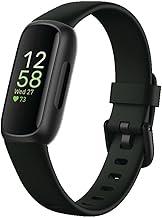
Amazfit Balance and Fitbit Inspire 3 target different user priorities at distinct price points. Amazfit Balance ($199) delivers a larger 1.5-inch AMOLED display with 480x480 resolution, always-on capability, built-in GPS, and Wi-Fi connectivity,ideal for users wanting comprehensive fitness tracking without phone dependency. Its 14-day battery life and aluminum construction justify the premium positioning. Fitbit Inspire 3 ($99) prioritizes affordability and simplicity with a compact 0.73-inch display, lighter 20g design, and 10-day battery life, making it excellent for casual fitness enthusiasts. Both offer identical health sensors (heart rate, SpO2, skin temperature, sleep tracking). Amazfit Balance edges ahead in features and longevity, while Fitbit Inspire 3 excels as an entry-level option. Choose Amazfit Balance if you want serious fitness capabilities and longer battery life; select Fitbit Inspire 3 if budget and minimalist design matter most.
Who Should Buy
Buy the Amazfit Balance if…
- →14-day battery life is excellent for a full-featured smartwatch
- →AI-powered Readiness Score helps optimize training and recovery
- →Lightweight at 35 g — barely noticeable on the wrist
Buy the Fitbit Inspire 3 if…
- →10-day battery life — charge once and forget for well over a week
- →Color AMOLED display is a huge upgrade over Inspire 2's grayscale
- →Ultra-lightweight at 20 g — perfect for sleep tracking
Category Scores
Pros & Cons
Amazfit Balance
Pros
- 14-day battery life is excellent for a full-featured smartwatch
- AI-powered Readiness Score helps optimize training and recovery
- Lightweight at 35 g — barely noticeable on the wrist
- Skin temperature and SpO2 monitoring at $199
- 150+ sport modes with GPS tracking
Cons
- No ECG monitoring
- Zepp OS has limited third-party app ecosystem
- No NFC for contactless payments
- No cellular connectivity — phone required for notifications
Fitbit Inspire 3
Pros
- 10-day battery life — charge once and forget for well over a week
- Color AMOLED display is a huge upgrade over Inspire 2's grayscale
- Ultra-lightweight at 20 g — perfect for sleep tracking
- SpO2 and skin temperature sensors at just $99
- 5ATM water resistance for swimming
Cons
- No built-in GPS — relies on phone GPS for outdoor tracking
- No NFC — cannot use Fitbit Pay
- Tiny screen limits notification readability
- Best health insights locked behind Fitbit Premium subscription
- No always-on display option
Full Specifications
| Spec | Amazfit Balance | Fitbit Inspire 3 |
|---|---|---|
| Software | Zepp OS 4 | Fitbit OS |
| Body | ||
| Weight | 35 g (without strap) | 20 g |
| Case material | Aluminum alloy | Plastic resin |
| Water resistance | 5ATM | 5ATM |
| Health & Sensors | ||
| ECG | ||
| SpO₂ | ||
| Skin temperature | ||
| Heart rate | ||
| Sleep tracking | ||
| Battery | ||
| Battery life | Up to 14 days (typical usage) | Up to 10 days |
| Display | ||
| Size | 46 mm (1.5 inches) | 0.73 inches |
| Type | AMOLED | AMOLED |
| Always-on display | ||
| Resolution | 480 x 480 | 256 x 124 |
| Processor | ||
| RAM | 32 MB | — |
| Chipset | Huami proprietary | Fitbit custom processor |
| Connectivity | ||
| GPS | ||
| NFC | ||
| Wi-Fi | ||
| Cellular | ||
| Bluetooth | 5.2 | 5.0 |
Related Comparisons
This comparison is based on verified manufacturer specifications covering display, performance, camera, battery, and build quality. Scores are generated by analyzing specs across weighted categories on a 10-point scale. Learn more about our methodology.
Explore more in smartwatches, see all Amazfit products or all Fitbit products. View full details for the Amazfit Balance or the Fitbit Inspire 3.